


For ‘Tribune’: the 2011 Top Ten
IT’S a term bandied around with dismaying frequency by some critics, but masterpieces of cinema are as rare as ever. By my subjective reckoning there have been only six in the last decade, and not since 2009 have I allotted any UK new-release a maximum five-star rating: Darren Aronofsky’s The Wrestler and also Neill Blomkamp’s District 9.
But even if nothing reached that level (Aleksandr Mindadze’s February-premiered Innocent Saturday still awaits British distribution) there was nevertheless a decent enough helping of outstanding fare. Half a dozen, for me, were particularly praiseworthy. In alphabetical order:
* Unheralded Aussie writer-director David Michôd’s crime-family saga Animal Kingdom,the year’s most promising debut.
* Joanna Hogg’s excruciatingly accurate study of a posh, dysfunctional family holidaying in the Scilly Isles, Archipelago (UK).
* Writer-director-star Miranda July’s drolly disturbing and daringly kooky The Future(USA/Germany).
* Gregg Araki’s daffily apocalyptic, sweetly raunchy campus-comedy Kaboom(USA).
* Kenneth Lonergan’s multi-layered Manhattan drama Margaret(USA).
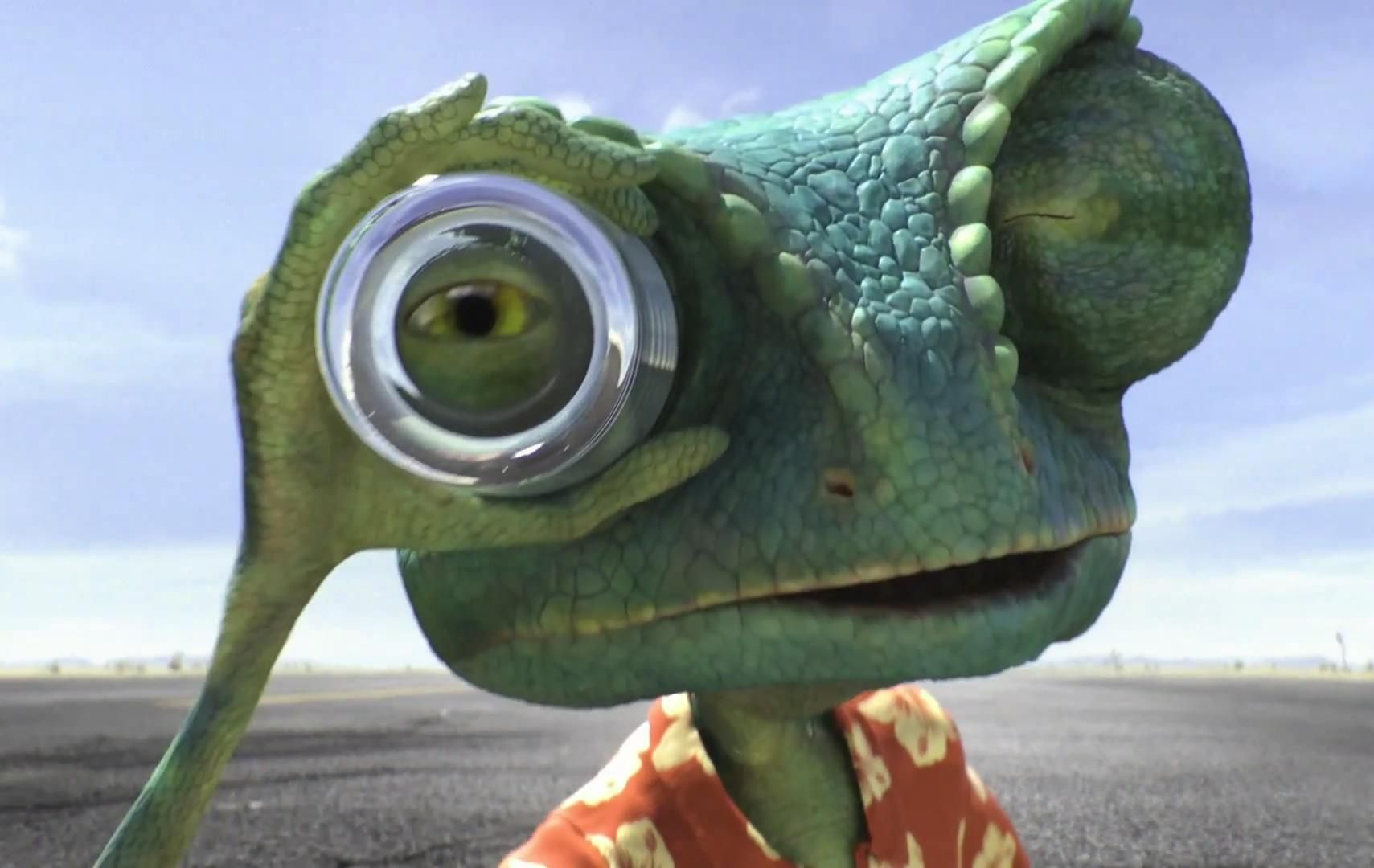
* Gore Verbinski’s sui generis animated comedy-western Rango(USA).
The Tribune Top Ten is completed by Jason Eisener’s Hobo with a Shotgun, Asghar Farhadi’s A Separation, Takashi Miike’s 13 Assassins, and Thomas McCarthy’s Win Win –edging out Ballast, Moneyball, Source Code and Wuthering Heights.
If forced to pick just two films from the ten, I’d take Rango and Margaret – two films which have enjoyed (or endured) drastically different levels of exposure. Rango is an irresistibly audacious mashup of Chinatown and Shane, with a hallucinatory Gonzo touch of Hunter S Thompson. Written by John Logan (Gladiator, Hugo, etc) and directed by Gore Verbinski (Pirates of the Caribbean) it ‘stars’ Pirates’ Johnny Depp – who, providing the voice of the eponymous and nerdishly neurotic lizard, turns in arguably the finest performance of his career.
Unsurprisingly for a Verbinski-Depp reunion from a major Hollywood studio, Rango was the recipient of ubiquitous ad-campaigns – and, boosted by stellar reviews, it enjoyed extended runs in every multiplex in Europe, North America and far beyond, taking $123m in the USA alone. That’s around 2,600 times the meagre $47,000 amassed by Kenneth Lonergan’s Margaret during its derisory American ‘release’ in November.
Given this paltry return on a reported $14m budget, and despite a cast including Oscar-winners Anna Paquin and Matt Damon, plus Mark Ruffalo, Jean Reno and Matthew Broderick, UK distributor Fox Searchlight opted for a token one-screen London engagement (at a small west-end Odeon) from December 2.
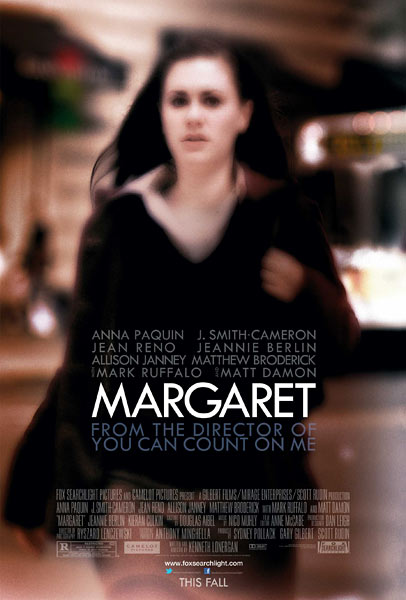
The fact that the picture has been the focus of more than one messy lawsuit (revolving around issues of length and ‘final cut’) evidently contributed to its exceedingly low profile. The sorry saga, including the crucial behind-the-scenes role played by Martin Scorsese, is more fully explained via several online articles (check out those by Mike D’Angelo, Tony Paley and Guy Lodge.)
But after receiving some ecstatic paeans of praise from British broadsheet reviewers, plus an international Twitter-campaign that saw film-geeks rallying behind the hash-tag #TeamMargaret, Fox have expanded the film into selected arthouses around the country.
And despite a daunting 150-minute running-time, Margaret does emphatically deserves to be seen. The film isn’t perfect, showing signs of its tortured post-production history. But even in its current, arguably ‘compromised’ form, it at least matches the humanistic complexity of Lonergan’s cracking 2000 debut You Can Count On Me – which starred Laura Linney and a then-unknown Ruffalo as long-separated siblings.
Margaret is a film whose sprawling plot-lines and multiple characters and exploration of social strata fully deserve the term ‘novelistic’. But whereas book-readers are engaged in an essentially solitary engagement with their texts, Margaret depends for its full effect on being seen with as large an audience as possible. Because, among other things, it’s an incisive and astute study of how people interact and generally rub along with each other in the 21st century, most especially in the large cities where – since 2007 – more than half of humanity resides.
And they don’t come much bigger than New York, the focus of a movie written in the aftermath of 9/11, and shot at a time – 2005 – when the shock-waves of that catastrophe were still very much a factor of daily life. Lonergan doesn’t address 9/11 head-on, and it’s only very occasionally mentioned in the dialogue, but Margaret (the title, a reference to a poem by Gerard Manley Hopkins, is pronounced with stress on the final syllable, like ‘martinet‘) is very much concerned with how flawed individuals deal with shatteringly tragic events, both alone and together.
The principal focus is on Lisa Cohen (Paquin), an articulate teenager who lives on the well-heeled Upper East Side with her mother Joan (J. Smith-Cameron), a successful but insecure stage-actress. Lisa inadvertently contributes to a road-accident in which a woman (a remarkable one-scene cameo from Allison Janney) is killed – though the chief cause is the negligence of a bus-driver (Ruffalo).
As the impact of this single incident ripples outwards, Lonergan examines its effects on Lisa – whose guilt gradually turns to outrage as she discovers that the driver has a history of recklessness behind the wheel – and those around her.
The film is punctuated by breathtaking scenes of raw, sometimes gruelling emotion as traumatic relationships explode into heated verbal exchanges. Rising to the stiff challenge of Lonergan’s screenplay, Paquin, with terrific support from Smith-Cameron, Janney, and Jeannie Berlin (an early-70s Oscar nominee making a belated return to prominence as the dead woman’s best friend), compellingly incarnates a character making a painful transition from spoiled solipsism to something resembling responsible adulthood.
Lisa throws herself into, and increasingly defines herself by, what becomes a personal moral quest for justice – or as much justice as circumstances and political/legal realities can permit. As she discovers, the reassuring thing about society is that one is never truly alone – but the price is that all of our actions have consequences, both for those around us, and for ourselves, which can far exceed anything we may be able to imagine or expect.
Neil Young
13th December, 2011
written for Tribune magazine
MARGARET : [8/10] : USA 2008/2011 : Kenneth LONERGAN : 150m (BBFC) : {23/28}
….. seen 2nd December at Odeon Panton St, London (£11.45) digital
RANGO : [8/10] : USA 2011 : Gore VERBINSKI : 107m (BBFC) : {23/28}
….. seen 9th March at Sunderland Empire cinema.
