


Cannes Palme d’Or 2011: best bets
At least 19 films will compete for this year’s Palme d’Or – main prize at the 64th Cannes Film Festival, which runs from 11th to 22nd May down on the Côte d’Azur – and that figure may rise to 21 or 22 if, as expected, a couple of extra additions are unveiled between now and opening night. There’s no mention, however, of the potential latecomers in the list of odds issued by Irish bookmaker Paddy Power – who are predictably opting for Terrence Malick’s The Tree of Life as 3/1 favourite to land the reclusive Texan a first Palme, sone 32 years after he won the Best Director gong for Days of Heaven.
With its combination of poet-auteur writer/director, a paparazzi-friendly red-carpet cast (Sean Penn, Brad Pitt), high-faluting metaphysical themes and rapturous cinematography, The Tree of Life may well quickly develop into a natural front-runner along the lines of Michael Haneke’s The White Ribbon in 2009. But it could just as easily prove an overcooked, overhyped, beautiful bust, and at Power’s current prices better value would appear to lie elsewhere. Penn’s other Croisette entry This Must Be the Place (Power 10/1) by Italian maverick Paolo Sorrentino, might even emerge as a more plausible Palme prospect than Tree – if its enigmatic trailer is any guide.
At this stage, however, the most intriguing candidates are three directors who have previously taken home the festival’s “silver medal”, the Grand Prix du Jury.
With the possible exception of Spain’s Pedro Almodovar – whose Skin I Live In, an unappealing 6/1 with Power, doesn’t look like a return to form – the closest to a Haneke figure (i.e. a respected, award-laden, Palme-overdue veteran familiar to arthouse denizens the world over) is surely Aki Kaurismäki. Revered in France, the 54-year-old Finn has churned out a steady (if sluggish) stream of hypnotically lugubrious deadpan comedies since the 1980s – including The Man Without a Past, which finished runner-up to Roman Polanski’s The Pianist in 2002.
His first feature for six years, Le Havre sounds like a characteristically wry affair, set in the eponymous French port and dealing with a refugee African child’s relationship with the middle-aged man who takes him under his wing. The Gallic aspects will do it no harm whatsoever in terms of Croisette reception, and Le Havre could well emerge as a consensus choice for the jury headed by Robert De Niro.
Respectable in terms of auteur pedigree, liberal-humanist in its themes (timely, given recent immigration issues between north Africa and the EU), and – unlike last year’s somewhat obscure Thai champ Uncle Boonmee Who Can Recall His Past Lives, or the forbiddingly austere White Ribbon – likely accessible to occasional arthouse patrons.
Paddy Power seem to have taken all of this into account, however: 6/1 is a fair reflection of Kaurismaki’s chances – absurdly, he’s a point longer than Denmark’s Nicolas Winding Refn, whose high-octane thriller Drive (even with a high-calibre cast that includes Ryan Gosling, Carey Mulligan and Breaking Bad‘s Bryan Cranston) looks much more Hollywoodish than the vast bulk of previous Competition selections, let alone Palme d’Or winners.
Refn’s ever-provocative countryman Lars Von Trier would appear to be his nations’s best shot at glory, with his sci-fi-tinged romantic drama Melancholia (Power 10/1) surely more awards-friendly than his last Palme entrant, 2009’s hysteria-stoking controversy-magnet Antichrist – which nevertheless landed a slightly unexpected Best Actress prize for Charlotte Gainsbourg.
Several directors have won more than one Palme – and Belgium’s Dardenne brothers can notch an unprecedented hat-trick were their Kid with a Bike (Power 16/1) to prevail – so Von Trier’s 2000 success with Dancer in the Dark isn’t necessarily a negative. But since 2006 the Palmes have all gone to first-time winners and it seems the percentage call to presume that this run will continue.
Trading at more than double the 5/1 on offer for Drive we find what is currently the best-value betting proposition, Nuri Bilge Ceylan’s Once Upon a Time In Anatolia. A two-and-half-hour chronicle of a doctor’s life in a rural village, this gives every impression of being a work of significant seriousness and ambition from the Turkish writer-director whose Distant (Uzak) took the 2003 Grand Prix and the Best Actor prize (split between its two leads).
One possible fly in Ceylan’s ointment is that it’s a little over a year since his compatriot Semih Kaplanoglu won Berlin’s Golden Bear for Honey, so there might perhaps be a feeling that Turkish cinema may have to wait a little while for further high-profile recognition (notwithstanding the 29 year gap since Yılmaz Güney and Şerif Gören’s Yol shared the Palme in 1982).
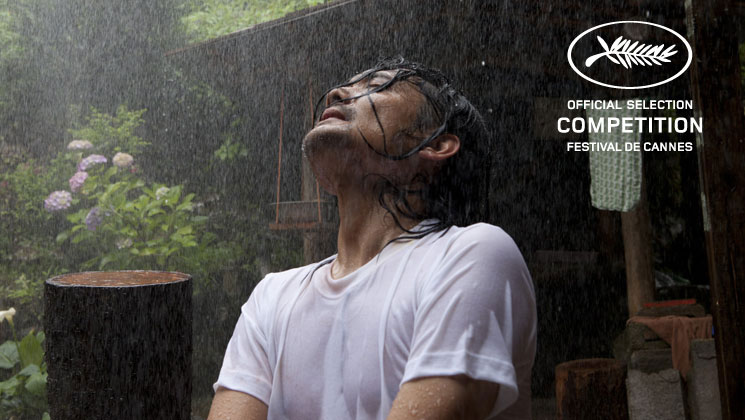
If topicality and sentiment were the main criteria then Naomi Kawase’s Hanezu would be very hard to beat. Since the disastrous events of mid-March, Japan has been constantly in the international spotlight, and the choice of Kawase (or even Takashi Miike, present with the Palme’s first 3-D contender Hara-Kiri, anunappealing 7/1 with Power) would be a very popular one – guaranteed to leave few dry eyes in the house come May 22nd.
Last year’s Thai triumph provides a note of caution – will Cannes reward east Asian cinema twice in consecutive years? – but this is outweighed by several compensatory factors in Kawase’s favour. Japan hasn’t won since The Eel shared the honours in 1997; juror Olivier Assayas, a critic-turned-filmmaker, has long been a vocal supporter of Asian cinema (and with De Niro much more self-effacing and low-key in real life than on-screen, Assayas’ influence could well prove decisive.)
Kawase’s gender is another advantage, as it’s a shameful stain on the festival’s reputation that the sole female Palme-laureate remains Jane Campion for 1993 The Piano (and even that was “only” a joint win). Last year, in the wake of Kathryn Bigelow’s groundbreaking Best Director Oscar success, Cannes received considerable flak for including only male directors in Competition. Twelve months on, the representation of women – four films – is a Cannes record, but of that quartet only Lynne Ramsay’s We Need To Talk About Kevin (Power 12/1), her first picture since 2002’s Morvern Callar, can be considered a serious Palme proposition.
Based on Lionel Shriver’s Columbine-inspired bestseller, Kevin would appear to have a much bigger chance in the weakish Best Actress category, with its powerhouse central role for the widely-respected Tilda Swinton (who has an Oscar and a BAFTA but no Cannes prize). Last but not least, there’s the fact that Kawase has Cannes “form”: her last fictional feature The Mourning Forest was a dark-horse Grand Prix winner in 2007.
A divisive figure even among hardcore cinephiles, Kawase lacks the arthouse celebrity of Malick, Von Trier, Kaurismaki and company – then again, only among distaff directors only Claire Denis is regularly ranked among the world’s very front rank. And Hanezu – tracing the development of Japan over the centuries by focussing on one particularly historic region, with an emphasis on spiritual and ecological matters – could be the ideal project to propel Kawase to much wider renown. While Paddy Power’s original quote of 12/1 is now but a memory, their revised odds of 7/1 still appear to err on the side of generosity. Ganbatte!
Neil Young
23rd April, 2011
Recommendations :
Once Upon a Time in Anatolia (Bir Zamanlar Andolu’da) – 11/1
Hanezu (Hanezu No Tsuki) – 7/1
Paddy Power’s Cannes odds page (prices subject to fluctuation).
Jigsaw Lounge’s constantly-updated (unofficial) Palme odds
Cannes Film Festival official website