
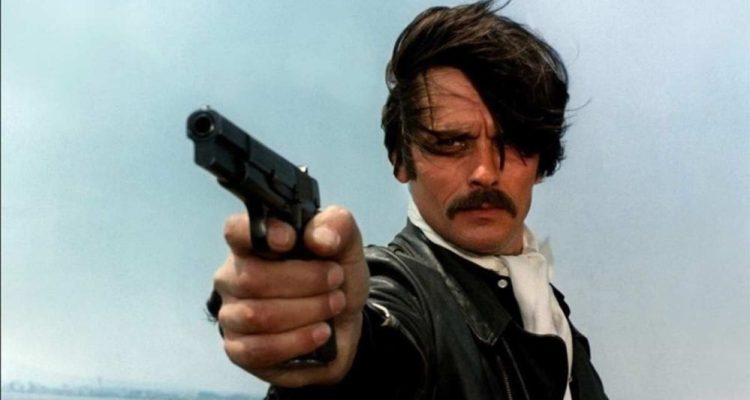

for this week’s Tribune : BERLINALE REPORT [in memoriam Michael Foot, 1913-2010]

The wildly influential American film-critic Manny Farber (1918-2008) is most famous for the distinction which provided the title of his 1962 essay White Elephant Art vs Termite Art. Farber was all for the latter – “termite-tapeworm-fungus-moss art … it always goes forward eating its own boundaries and, likely as not, leaves nothing in its path other than the sings of eager, industrious, unkempt activity.” And he was dead-against the former, which he summed up as “the idea of art as an expensive hunk of well-regulated area.”
I don’t know if Farber ever made it to the Berlin International Film Festival – a.k.a. the Berlinale – but if there ever was a white-elephant movie-related event, this is it. The self-proclaimed biggest film-festival in the world, the Berlinale – which, commendably, seeks to attract those members of the public which its big Euro-rivals Cannes and Venice so assiduously exclude – trumpets its ticket-sale tally at the end of every renewal.
This year, the Berlinale’s 60th, meant a record 300,000 “visitors,” most of them purchasing tickets for films (though there were also a few installations and gallery exhibitions – including James Benning’s excellent 18-minute three-screen loop TULARE ROAD) listed in two hefty catalogues: a 466-page phonebook-sized volume covering the multifarious main sections (Competition; Berlinale Special; Panorama; Generation, etc etc), and another 260-page tome dedicated to the edgy ‘Forum’ section, which was, more quietly, celebrating its own 40th anniversary.
“Quantity has a quality all its own,” as Joe Stalin once supposedly remarked – and that might well be the motto of Berlinale’s boss Dieter Kosslick, a puckishly jovial chap not especially known for the depth of his cinematic knowledge. Kosslick’s emphasis is unashamedly on attracting big names to keep the Berlinale in the public eye: Martin Scorsese and Leonardo DiCaprio were around for the glitzy red-carpet premiere of Shutter Island; Pierce Brosnan and Ewan McGregor for Roman Polanski’s The Ghost Writer (Polanski himself was otherwise… detained); Renée Zellweger, serving on a main-competition jury headed by tireless German maverick Werner Herzog.
Kosslick’s Berlinale tenure began with the 2002 event – which happened to be my own Berlinale debut, and also the festival’s first year at the functional but soulless Potsdamer Platz development in Berlin’s heart. I was such a greenhorn that I foolishly presumed that the best movies would be in Competition – indeed, Berlinale regulars reckon you can judge how experienced a critic is by how long it takes him or her to abandon the supposed creme de la creme and dive into the riskier but much more rewarding sidebars. Over the years I’ve learned from painful experience that the Forum is the most likely repository of worthwhile material, and listening to world-weary dispatches from those who plugged away at the Competition certainly didn’t make me regret my decision this time around.
In a generally low-key year, the Forum yielded two genuine standouts – both of which, I suspect, would have found favour with the notoriously tough-to-please Mr Farber. THE WOLF’S MOUTH (La bocca del lupo) in particular exemplifies his “termite-tapeworm-fungus-moss” paradigm. A rough-edged but grittily beautiful delve into the warp and weft of live in Genoa’s gloriously seedy waterfront area, it mixing contemporary mid-definition video along with amazing archival material – much of it on tinted 8mm and 16mm monochrome. Debutant director Pietro Marcello crafts a brilliant, poetic miniature that crams centuries of experience into a brisk 70-minute running-time, along the way relating a particularly touching and unusual love-story involving a pair of colourful Genovese.
The closest recent comparison is Terence Davies’ barbed billet-doux to Liverpool, Of Time and the City (2008) – and the juxtaposition certainly isn’t to Marcello’s disadvantage. Indeed, one would be forgiven for presuming that Marcello is a battle-scarred cine-veteran of Davies’s vintage, whereas in fact he’s a 33-year-old with only a handful of shorts in his filmography. The Wolf’s Mouth instantly propels him to the front rank of Europe’s documentarians – though he must share the glory with his collaborator Sara Fgaier, who edited the film and also sought out the archival materials. It scarcely seems believable that this is Fgaier’s first movie credit – but the IMDb never lies.
 The other highlight of the Forum – heck, of the whole Berlinale – features another superb creative double-act, this time on either side of the camera. 42-year-old writer-director Thomas Arslan has been an up-and-coming talent for some time, with four features and an acclaimed documentary to his name. But he jumps to a whole new level with his audaciously minimalist thriller IN THE SHADOWS (Im Schatten), a character-study of a moody career-criminal planning one last heist.
It’s exceedingly familiar genre material given cool, intoxicatingly steely treatment by Arslan, built four-square on the solid shoulders of leading-man Mišel Matičević. A 40-year-old Croat-German from Berlin who resembles a cross between Sean Bean and Alan Price, Matičević has previously lurked relatively unnoticed in TV roles and supporting parts in movies – but he emerges here as a fully-fledged movie-star, holding the screen with precise, laconic charisma. The film makes no bones about being a small-scale homage to Michael Mann’s perpetually seminal Heat, with Matičević’s Trojan fulfilling a similar narrative function to Robert De Niro’s Neil Macauley from that 1995 crime-saga classic. A daunting challenge for any actor, but one to which Matičević rises with terrific aplomb – this may be the first time you’ve encountered his name, but it most certainly won’t be the last.
Two more for the notebook: first, Patrick Hughes, a thirtysomething Australian writer-director-editor-producer whose entertaining and deceptively smart genre mashup RED HILL – a neo-western set in the outback with horror and comedy touches – was quickly (and unsurprisingly) snapped up for UK and US distribution. Then, at the opposite end of the scale (and much less likely to rock up at a cinema anywhere near you) but no less promising, a 30-year-old photographer/painter/producer from Goma in the Democratic Republic of Congo named Kiripi Katembo Siku. Despite having hardly any movie-making experience, he contributed the two strongest episodes to four-part short-documentary compilation CONGO IN FOUR ACTS, bringing home the horrors of slum-poverty and child-labour alike in powerfully harrowing style.
Neil Young
23rd February, 2010
(written for the 3rd March edition of Tribune magazine)

IN MEMORIAM MICHAEL FOOT, 1913-2010
Editor of Tribune magazine, 1948-1952 and 1955-1960, and contributor from 1937
Jigsaw Lounge 2010 Berlinale index-page