


Kaunas Film Festival, Lithuania – Sheila Seacroft’s report (2/2)

The day begins with a bus ride out across the river and through suburbs of flats and little wooden houses takes me out to the other major venue, the Cinamon multiplex at out-of-town shopping mall MEGA, a Ballardian vision beside the main Vilnius-Klaipeda motorway, tower blocks on the one side, forests on the horizon, and a large cemetery glimpsed behind walls off the approach road. Inside MEGA you meet with the looks, dry warmth and fast food smells of any shopping mall in Western Europe, except for a 2-storey-high aquarium alongside the escalators which brings a welcome bit of life.
AGAINST ALL ODDS [6/10]
Mit dem Bausch durch die Wand: Switzerland 2011: Anka Schmid: 93m
Like A Partisan’s Wife (see part one), this film is part of the festival’s ‘Identity’ strand, looking at stories about ‘society, self-development and solidarity’. All three are strong factors in this in-depth portrait of three teenage mothers, from the time when people stare at your swollen body and tut, right through to the babies’ development into little individuals at three years. But it’s watching the parents, and mostly the mothers, grow up themselves which grabs the interest here. Three different situations, with different and difficult decisions to make: Sandra is maybe the luckiest of the three, with a sensible and supportive father to her child, and hers is the most conventional route, moving in together, marrying and subsequently having a second child. Jasmin has a rough ride, not at all the life she planned. Coming from a children’s home herself, with no family support and precious little participation from her very young partner, she makes the decision to let her son spend weekdays in a home while she tries to train for a job. Jennifer is the most impressively mature, as she talks candidly about the changes she has found in herself. For a director who also has made video installations and experimental pieces and considers herself as working at the crossover of film and art, it’s a surprisingly straightforward piece of work, maybe a little too long, but full of insights nevertheless.
THE ACACIAS [8/10]
Las Acacias: Argentina/Spain 2011: Pablo Giorgelli: 84m
Already garlanded with awards from Cannes, this little gem of a film burrows its way so subtly into your heart that by the end you’re taken by surprise by how deeply you feel for characters. Rubèn is a prickly and taciturn truck driver who’s been asked by his boss to pick up a woman passenger on his delivery route from Paraguay. Used to his own company, he’s not keen, and then when it turns out she has a baby with her, he’s even less happy. In the course of the journey, he is opened up by the presence of the mother and baby. That’s about it. Not a lot actually happens, change is slow and subtle, and we rarely leave the claustrophobic cab. How hackneyed or tedious it could have been, but enormous subtlety and great performances have made something beautifully warm but never sentimental. A sense of undefined sadness and loss deep in Rubèn’s nature makes the moments of uncomplicated happiness all the more striking. Never work with children is advice Pablo Giorgello did well not to heed, for the baby, an almost constant onscreen presence, is indeed as he describes her ‘a miracle’, with her steady gaze that seems to penetrate the hearts and minds around her. It all looks so natural, it’s easy to underestimate the unobtrusive skills involved, not only in the use of a baby as a main character, but also technically working in such a confined space. In the current feast of striking films coming out of Argentina, this modest, humanist film can proudly hold its own.
WE MIGHT AS WELL FAIL [7/10]
Luxembourg 2010: Govinda Van Maele: 82m
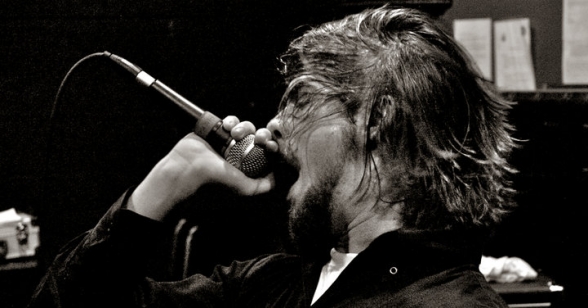
Rock music in Luxembourg? How can a country with ‘the largest GDP in Europe and a safety-first attitude’ produce true rock, is the conundrum set by this interesting film. It’s a loud, muscular, male genre on the whole, metal-inspired but developing in various directions, and the film tracks several bands, from headbanging students to the 15-year-strong Defdump on their farewell concert, from sweaty low-ceilinged rooms through rain-sodden half-empty fields to modest arenas. Impossible for an elderly personage like me to judge their worth (though I was quite taken by the more melodic Eternal Tango), but they seem to be doing modestly well internationally. The theme in conversation is always the pull between their music and the practicality of their futures. While for some music is everything, students talk about their upcoming ‘ordinary’ careers, when playing full time in a band doesn’t seem a life option; older musicians say how once having tasted the security of proper jobs they find it hard to see a permanent future in music. Most have at least part time jobs – we see one teaching history in school. Luxembourg may be the particular setting, but in fact it’s a pretty good view of the ultimate problem of rock bands – how long can the fire of youth keep you going on in relative discomfort while your peers settle down with homes and families? What is peculiarly hard for these chaps is that in their communities there is so little in the way of deprivation to kick against, the spark for so much rock music.Van Maele strikingly sets their anarchic darkness in counterpoint to moments of stillness – the fertile chocolate-box country they inhabit, the tidy towns, the banal surroundings in which their music is played. And he begins and ends the film in scenes of more typically Luxembourgian jollity – an organised parade featuring the Grand Duke and Duchess and well-turned-out military band playing swing, and the misrule of a fairground. The Luxembourg we think we know.
GRAVEYARD KEEPER’S DAUGHTER [6/10]
Surnuaiavahi tütar: Estonia 2011: Katrin Laur: 98m
Small town Estonian life is grim for eight-year-old Lucia, with her perpetually drunk young mother and easy-going gravedigger father who’s almost given up trying. She’s seriously behind at school, and often hungry at home, yet she has a kind of blissful freedom, running wild with the other kids and particularly with her Down’s Syndrome friend Jats, daughter of an apparently similarly hapless artist who lives in the village. A chance to spend a week away in the city staying with lively pastor Sirpa shows them all what a better life could be like, and Lucia warms to her new motherly friend who likens her to Pippi-Longstocking. But back at the graveyard life soon gets as bad, if not worse, than it was before when her father goes away in despair to find work, and tragedy ensues. There are very good things in this film: Maria Avdjushko is excellent as the weak-willed and self-hating mother, and as a child’s eye view of a deprived life it’s often very well done. But certain elements – chief of which are the melodramatic and at times contrived-looking plot and a surreal/spiritual note that’s verging on the mawkish – keep one from totally engaging with this slice of bleak Estonian life.
ESSENTIAL KILLING [5/10]
Poland, Norway, Ireland, Hungary 2010: Jerzy Skolimowski: 83m
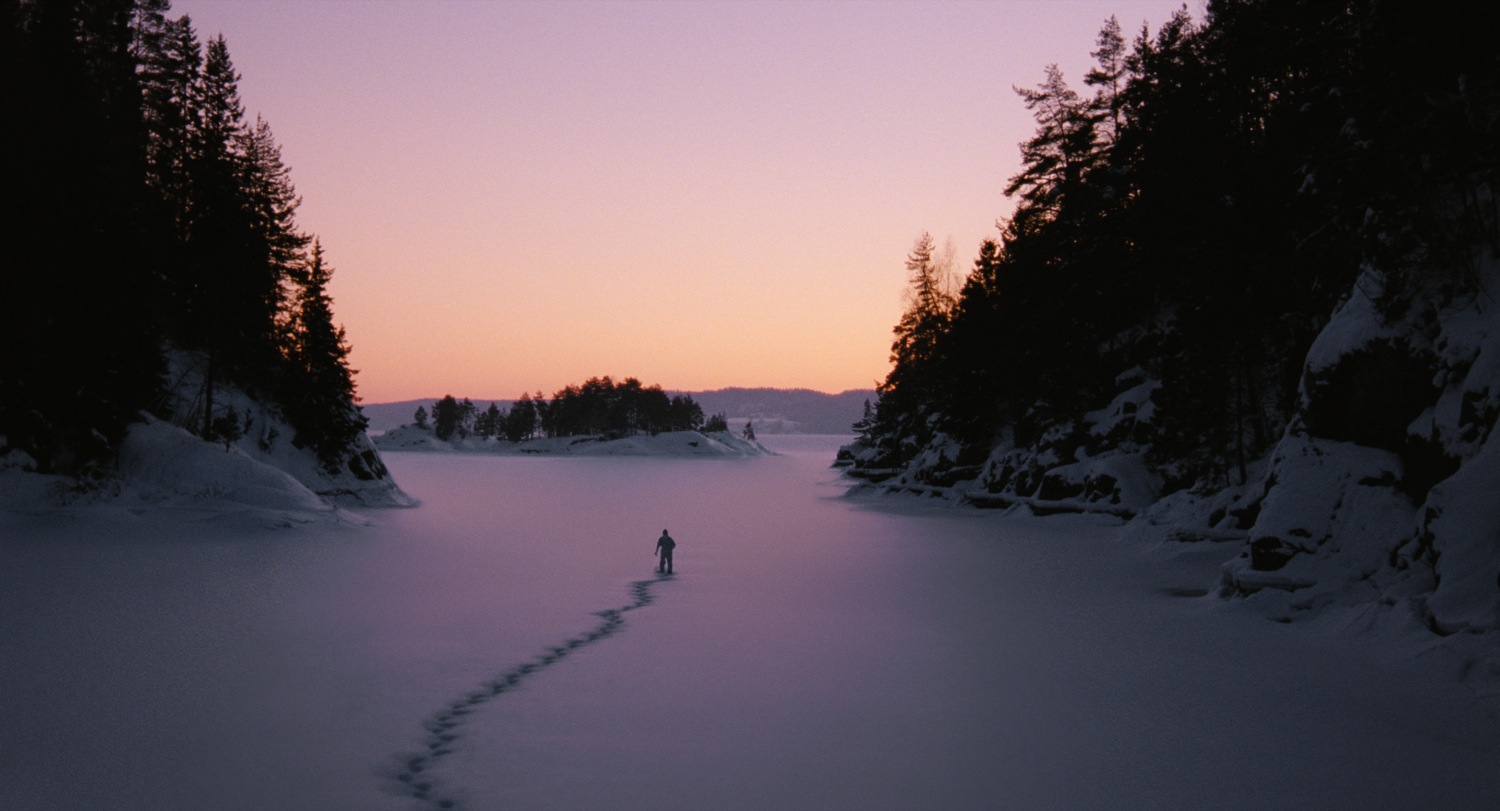
Oh dear. Another earnest, much lauded film that I really didn’t get. This is the grim tale of ‘Mohammed’ (not named until the cast list), a Taliban fighter captured after killing a pair of trippy young US businessmen and their GI guard in the desert, and his suffering after Guantanamo style treatment and subsequent rendition to wintry Eastern Europe. When the convoy carrying him crashes in the snow, he escapes and we follow his grim exploits as he tries to survive. Is it political, is it existential? Certainly the opening portrayal of the Americans as a pair of capitalistic buffoons and the (chillingly done) mechanics of torture, while in contrast Mohammed kills initially only when cornered and scared out of his wits and later for self-preservation, tell me that it is the former. But it’s trying to be the latter too. The problem with portraying perpetual suffering is that it easily becomes, I’m sorry, tedious, and as Mohammed staggers and moans from one disaster to another, killing and getting injured as he goes, the shock card is soon played out. Vincent Gallo won Best Actor prize at Cannes for this portrayal, and he certainly suffers for his art, but a certain Christ-like look to his suffering face bring awkward memories of Mel Gibson’s masochistic Passion of the Christ. Visions in washed out colour, memories, echoes of Muslim texts, might try to give a context for Mohammed, but don’t sit well – better to leave him faceless, characterless. Calamities seem to be lined up in almost farcical fashion. A felled tree happens to fall just where he is lying hidden, and two incidents with women make the feminist hackles rise – there’s the mother cycling down an perilously rutted and icy track in the forest with her baby bound to her – are you mad, woman? Get off the bike and push it instead! – who happens to be conveniently lactating, and worst of all, a saint-like woman able to speak only by signing in a cottage all alone who protects him, feeds him and binds up his wounds – shades of the blind protector in the woods in Hitchcock’s Saboteur. The only other woman onscreen is the beautiful and idealized wife we see in the visions. Couldn’t we have had a tough female soldier to muddy the waters a bit? I remained stony hearted, and particularly at the final ride into oblivion on the symbolic, blooded, white horse.
– – – – – – – – – –
So, that was my last film in Kaunas. It was a privilege to be at a festival so obviously propelled by passion, a brilliant coming together of cinema from all directions. If it had a fault, it has to be the distance between screen venues and the lack of a central one, meaning that bods like me who like to dash from screen to screen to get to the films they want to see can be frustrated. But after all this only applies to a small proportion of festival-goers, and of course if the beautiful Romuva comes into play again for subsequent years, that will be far less of a problem. It’s a salutary thought that, tempting though it is for those of us with a western European perspective to see Lithuania as the distant edge of Europe, Kaunas is in fact not far from the geographical centre of the continent. The festival certainly had the feel of an activity full of life, very much at the heart of things, and I applaud it.
Sheila Seacroft
16th October, 2011
part one of this report is here
