
for Tribune: Antoine Fuqua’s OLYMPUS HAS FALLEN [6/10]

Olympus Has Fallen
Director: Antoine Fuqua
… and Leonidas has risen! Leaving aside the fortuitous topicality of a movie that posits an invasion of the United States by North Koreans (renegade radicals rather than Kim Jong-Un’s government) the chief interest in director Fuqua’s eighth outing concerns the belated ascent of Paisley’s Gerard Butler to the status of Hollywood action star. The 43-year-old former trainee lawyer has been plying his thespian trade in Los Angeles since the end of the last century, and even at the time of his big-screen breakthrough in the title role of Patrick Lussier’s quickly forgotten Dracula 2000 (aka Dracula 2001) was being seriously bruited as a future James Bond.
With Daniel Craig, post-Skyfall, secure as 007 for at least one more movie, that particular boat may have sailed – Paddy Power rank Butler a 20/1 shot to be the next incarnation of Ian Fleming’s super-spy, with ten candidates ahead of him in the betting. But this is a juncture when big-screen tough-guys of convincing swagger and solid box-office appeal are in short supply: this winter’s comebacks from Messrs Schwarzenegger (The Last Stand) and Stallone (Bullet to the Head) tanked spectacularly; reliable draws Bruce Willis and Liam Neeson are 58 and 60 respectively; Jason Statham seems content to treading water at a level only one notch above the dreaded straight-to-video (last month Parker, next month Hummingbird…)

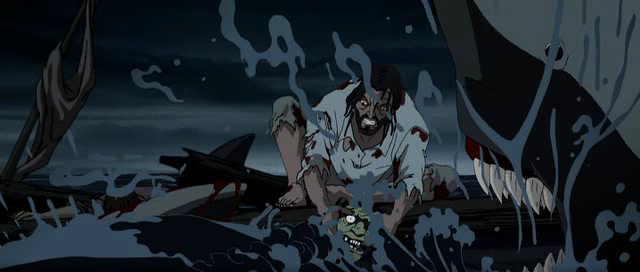
Over the last dozen years, Butler’s stop-start career has included several peaks of real achievement and promise: 2007’s 300, in which he bellowed valiantly (“this – is – Sparta!!!”) as Sparta’s King Leonidas; the terrific voice-over in the Watchmen-supplement animated short Tales of the Black Freighter [2009] – probably his finest performance to date in what’s arguably the most accomplished project he’s worked on; flexing Shakespearean muscles in Ralph Fiennes’ extremely muscular Coriolanus [2011]); plus some admirably leftfield choices such as Neveldine/Taylor’s giddily post-modern Gamer (2009) and the mud-spattered, Icelandic Beowulf and Grendel (2005).
But there’s also been the sense of a jobbing actor with his eyes on the main chance, grabbing at some ill-advised vehicles along the way including Joel Schumacher’s execrable Phantom of the Opera (2004) and a slew of undistinguished romantic comedies trading on a bed-hopping persona much beloved by Hollywood’s more salacious gossip columns.
While essentially no more than a diverting slice of pyrotechnic escapism – albeit with an incongrously classy cast that includes Oscar-winners Morgan Freeman and Melissa Leo alongside 1990s nominees Angela Bassett and Robert Forster – Olympus Has Fallen, which lists Butler as one of three main producers, has been doing well enough at Stateside box offices to now indicate a decade or so of leading-man heroics for the beefy, blue-eyed swaggerer.

He hits just the right notes of straight-faced self-awareness as former special forces operative Mike Banning, the only hope for the USA after the White House (secret service code-name: Olympus) is invaded and occupied by nefarious visitors from north of the DMZ. Though virile and relatively youthful, the President (Aaron Eckhart) is held helpless hostage of the evildoers in a fortified bunker beneath the Oval Office, along with his plucky Secretary of Defense (Leo). The odds and the numbers are stacked massively against Banning, needless to say. But he has the experience and tactics to prevail, plus a blithe attitude to torture – when he takes two Koreans captive – that’s more troubling (because played for macho laughs) than anything in Zero Dark Thirty.
This morally dubious section apart, Olympus Has Fallen overall represents another competent if ultimately unremarkable genre outing for C-level director Antoine Fuqua – best known for Training Day, even if his most effective outing is perhaps King Arthur (2004), starring another James Bond manqué, Clive Owen. He handles the set-pieces with anonymous aplomb, barrelling us from set-piece to set-piece as the stakes are raised to science-fictional levels of apocalyptic threat that wouldn’t be out of place in the much more fantastical GI Joe: Retaliation – which Olympus now stealthily replaces on our multiplex screens.
Neil Young
9th April 2013
written for Tribune magazine