

Florian Henckel von Donnersmarck’s ‘THE TOURIST’ [3/10]
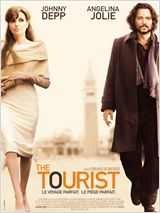
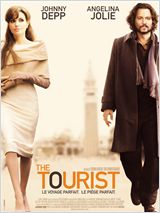
John Cleese once remarked that the character of Basil Fawlty was “all about height, and the downfall of height” – a description which also fits German/Austrian writer/director Florian Henckel von Donnersmarck, and his spectacular sophomore slump with The Tourist. In 2007, thanks to his debut The Lives of Others – a dourly downbeat, well-acted, excessively melodramatic take on East Germany’s Stasi terror – FHvD wasn’t just a charming, educated, cultured, wealthy aristocrat standing a whisker under six foot nine in his stocking feet. He was also an Oscar-winner (in the “foreign-language” category), recipient of countless ecstatic reviews, plaudits and awards.
In the enviable position of having something akin to carte blanche for his follow-up, FHvD elected to adapt an obscure, commercial French thriller – Jerome Salle’s Anthony Zimmer (2005), a notable box-office flop that did nothing to revive the faltering career of its female lead, Sophie Marceau. With two of the world’s most famous and bankable movie-stars on board in the shape of Johnny Depp and Angelina Jolie, all looked well. But the fact that three different writers are credited as having worked (separately) on the script – von Donnersmarck and Julian Fellowes and Christopher McQuarrie – indicates that the passage from screen to page and back to screen was far from a smooth one.
This, added to the very low-key pre-publicity for what should in theory have been a major pre-Christmas release, led many to expect the very worst. And while The Tourist – budgeted at a reported $100m – isn’t a total disaster, it’s enough of an Untergang for FHvD to give those of us who had our doubts about The Lives of Others (and who reckoned Pan’s Labyrinth would have been a much more deserving Oscar recipient) feel more than a slight pang of Schadenfreude.
Jolie is the mysterious Elise, an Englishwoman who has been romantically entangled with an even more mysterious criminal, Alexander Pearce – the latter now on the run after absconding with several billions belonging to shady gangster Reginald Shaw (Steven Berkoff). Following Pearce’s written instructions, Elise travels from Paris to Venice by train. On the way, she – again, as per Pearce’s command – seeks out a passenger who roughly corresponds to Pearce’s age, height and build, settling on a Wisconsin “math” teacher, Frank Tupelo (Depp). During a period spent lying low, Pearce has apparently altered his appearance via expensive cosmetic surgery – meaning that neither Elise, nor the Interpol agents pursuing his trail – now know what he looks like. Tupelo, a widower holidaying in search of a little adventure, is thus set up as a patsy to throw the cops off the scent…
It’s a cumbersome, wildly implausible set-up – but no more so than those fast-paced, unapologetically silly, opulently glamorous Euro-set thrillers of the 50s and 60s which FHvD seeks to emulate (there are also hints he’s somewhat cack-handedly aiming at Hitchcock territory here and there.) And under different circumstances, it might possibly have come off – the premise isn’t so far from the ordinary-person-whisked-into-exciting-derringdo idea underlying the daft-but-fun Knight and Day.
But the leads have scarcely any chemistry – Jolie* seems to be primarily concentrating on her deportment (in a string of fancy gowns and outfits) and brittle accent, while Depp – sporting unflattering tousled locks and unkempt facial hair – gives the slightly dazed impression of having wandered in from a sillier, more slapstick affair altogether.
Von Donnersmarck surrounds his toothsome central pairing with a gallery of character-players who are largely content to go through the motions as they ponder their paychecks – Berkoff, Timothy Dalton (his presence a thuddingly unsubtle nod 007-ward), Paul Bettany (in his second howler of 2010 after the even lousier Legion), Rufus Sewell, while a cameo from Don’t Look Now‘s harrassed cop Renato Scarpa (given little more than a walk-on as a befuddled tailor) stirs memories of the Nicolas Roeg masterpiece that emphatically aren’t to this picture’s advantage.
Indeed, Von Donnersmarck’s stilted handling of the intermittent action set-pieces is so uninspired and unimaginative – it’s always easy to spot, for example, which shots were taken on a set and which on location – that he and veteran/semi-retired cinematographer John Seale (notching only his second credit since 2006) pulls off the seemingly impossible feat of making La serenissima (even in foggy March) look dully uninviting. Two editors are credited – Lives of Others cutter Patricia Rommel (who also worked on Germany’s previous Oscar champ, Nowhere in Africa), plus Joe Hutsching (responsible for Oliver Stone’s similarly incoherent W. ) – and, as with screenplays, this is more often a sign of “too many cooks” than “many hands” making “light work.” Then there’s the near-incessant, grindingly old-fashioned score from James Newton Howard, deployed to (counterproductively) emphasise just how nerve-tingling amusing proceedings are supposed to be.
Worst of all is the picture’s laboriously set up, clunkily executed “twist” finale, one which any self-respecting cinemagoer should have sussed out before the end of the first reel. Let’s just say we’re a very long way from the famous surprise finale of McQuarrie’s The Usual Suspects – heck, even the mildly unexpected denouement of Fellowes’ similarly Academy-rewarded Gosford Park packed more of a punch.
Neil Young
12th December, 2010
THE TOURIST
[3/10] : US/Fr 2010 : Florian HENCKEL VON DONNERSMARCK : 103m
seen 10/Dec/10 at Reel cinema, Newark (Nottinghamshire) : (£6.70) : {7/28}
* “I was looking for a very short thing to do before Brad started filming Moneyball. And I said I needed something that shoots not too long, in a nice location for my family. Somebody said there’s a script that’s been around, and it shoots in Venice and Paris. And I said, ‘Is it a character I haven’t played before?’ And they said, ‘Yes, it’s a lady.’ Uhhuhhuhhehhehheh.”
Vogue