


Gary Ross’s SEABISCUIT [6/10]
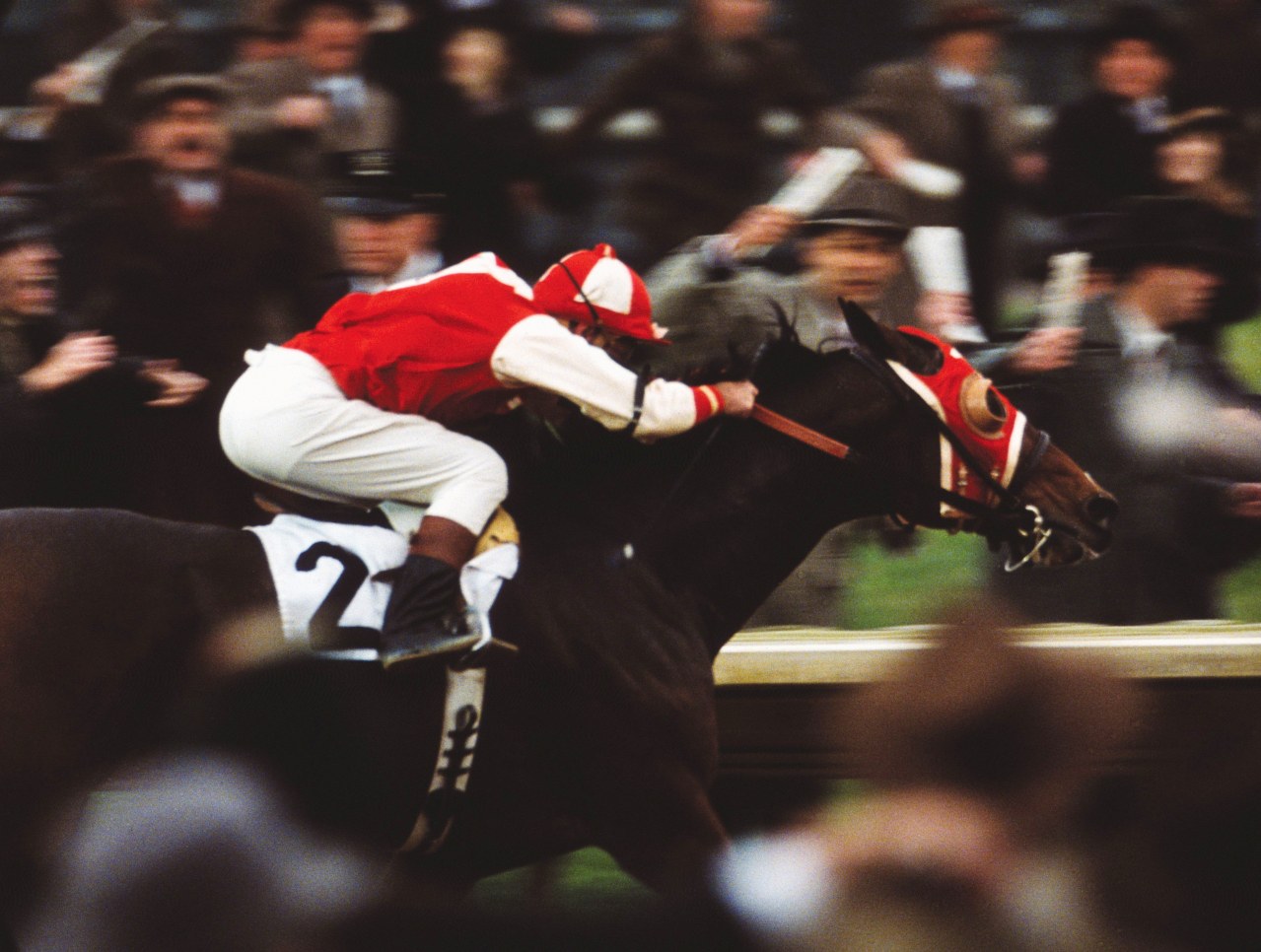
Seabiscuit the movie has much in common with Seabiscuit the horse: both overcome slow starts to stage improbable late rallies that carry them victoriously over the line. But while the thoroughbred wins most of his races with something to spare, it’s a tight photo-finish for the film: Ross;s grindingly old-fashioned, thuddingly “inspirational” approach nearly nobbles a true story so implausible that, if fictional, would surely be laughed off the screen.
In a mid-30s America struggling to escape the Depression, automobile-millionaire Charles Howard (Jeff Bridges) employs old-school horseman Tom Smith (Chris Cooper) to find him a champion thoroughbred. Smith selects the undersized, temperamental, apparently talentless Seabiscuit, and the half-blind journeyman Red Pollard (Tobey Maguire) as his jockey. The rest is racing history: though initially a slow learner, Seabiscuit’s run of victories in big California handicaps captures the imagination of the public— setting up a match-race with east-coast blueblood Triple Crown hero War Admiral. The David-and-Goliath contest duly takes place, with pulsating and unlikely results—but turns out to be merely a prelude to the amazing final chapter in Seabiscuit’s career.
Writer-director Ross takes a Harry Potter approach to Laura Hillenbrand’s 2001 non-fiction bestseller—this is an over-reverent handling of a book beloved by its many vocal fans. Condensing a hefty tome to reasonable feature length, he deploys old-fashioned techniques: on-screen captions telling us where and when we are; close-ups of newspaper headlines and photos; copious narration (by David McCullough) often accompanying monochrome stills of Depression-hit Americans. The results would have looked old-hat back during Seabiscuit’s prime—Robert Redford’s hopelessly square 1920s golf picture The Legend of Bagger Vance comes to mind, and Ross’s movie could be described, equine-pedigree-wise, as being by Bagger Vance out of National Velvet, so shamelessly is the corn ladled out.
Then again, the Seabiscuit story—described by whiskey-swigging racecourse commentator “Tick Tock” McGlaughlin (William H Macy, excellent as the movie’s vital comic relief) as “The Little Engine That Could”—does lend itself to Ross’s emphatically manipulative, classy-sugary style, aided and abetted as he is by Randy Newman’s exuberant score and cinematographer John Schwartzman’s chocolate-box-beautiful visuals. The film does, apparently, pretty much adhere to the facts—though contemporary reports suggesting that Seabiscuit and War Admiral were actually the same size is somewhat worrying, given that so much play here is made of how the 18-hand War Admiral towers over his 15-hand rival.
Such elaborations*, while hardly necessary, are forgivable—this is a film designed to be an all-out crowdpleaser, and it functions well enough in that regard. The performances are solid across the board: Bridges, Cooper, Maguire and Macy are all in good form, and the less-familiar faces of Elizabeth Banks (as Howard’s wife) and real-life top jockey Gary Stevens (as the pilot who takes over on Seabiscuit when Pollard is injured) acquit themselves well.
But it’s glaringly noticeable that, while Seabiscuit’s owner(s), jockey(s) and trainer have proper roles, his groom Sam—who would have spent more time with the nag than the rest of them combined—is relegated to the sidelines. This is especially unfortunate (and troubling) as Sam happens to be the films only non-white character: actor Kingston DuCoeur** is African-American. Until very late on, Sam is sufficiently mute to make viewers wonder whether Ross has transferred to him trainer Smith’s legendary taciturnity, Cooper being much chattier than the book’s “Silent” Smith. If this is supposed to be a deliberate echo of the past—how 1930s movies presented non-white characters—then it’s all too disturbingly effective.
And on a wider level, Seabiscuit is yet another example of a billion-dollar studio cranking out a triumph-of-the-underdog parable—even though the upstart Dreamworks is, relatively speaking, still “the little studio that could” in major-league Hollywood terms. Sumptuous in every aspect of its production design, and showing off its considerable budget at every opportunity, the picture itself is much more of a War Admiral than a Seabiscuit.
In a fair and ideal world, poetic justice would be served if an upstart low-budgeter came from nowhere to pip it at the box-office and the Oscars: perhaps the notably-unsentimental French man-and-horse drama Mister V. American audiences will probably never get the chance to make the comparison, of course: the way cinema and the world have developed since 1938, the celluloid Seabiscuits of today are lucky to make it into the starting stalls, never mind get even the faintest sniff of the winning post.
Neil Young
6th November, 2003 (seen same day : UGC Boldon)
USA 2003 : 140 mins
* Apparently this isn’t the only embellishment effected by Ross. According to a letter in the Racing Post of 9th November 2003 (‘Were orders given not to break The Biscuit?,’ by Michael Tanner), Seabiscuit “was never more than half a length off the lead throughout [his final] race.”
** Reportedly a veteran singer-songwriter-actor, DuCoeur is also known Carl M Craig; his personal motto—not inappropriate given the circumstances—said to be “Function in disaster, finish in style.”
–