


R-PATZ TO C-PETZ: BERLINALE 2012 (for Tribune)
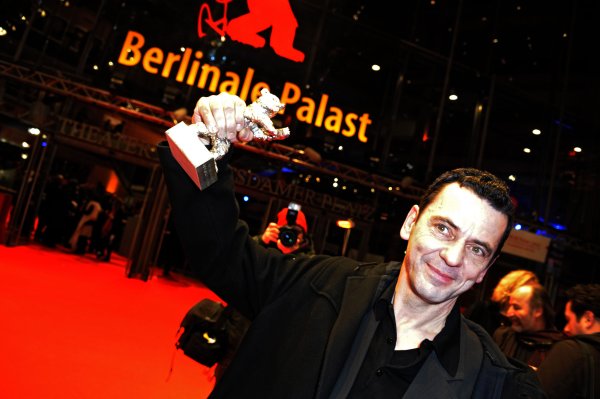
IT was at 1982’s Berlinale – a.k.a. Berlin International Film Festival – that Germany’s most brilliant post-war director Rainer Werner Fassbinder finally won the top prize, the Golden Bear. Veronika Voss succeeded where Fassbinder’s previous six Berlinale contenders had failed, but Fassbinder didn’t have long to savour his triumph – less than four months later he was dead of drug-related heart failure, aged 37.
With him, it’s sometimes said, died the New German Cinema of which he’d been a titanic figure – one of a triumvirate alongside Wim Wenders and Werner Herzog whose films played as automatically in British arthouses as those of their French equivalents. Three decades later, ask a dozen denizens of your nearest highbrow-friendly picture-palace to name a living German director and it’s likely that Wenders and Herzog would still be the most frequently cited.
But when it comes to directors below pensionable age, things become trickier. The vagaries of UK distribution have long made it ridiculously difficult for non-festival-going audiences to keep up with German-language cinema. Andreas Dresen, Maren Ade, Ulrich Köhler, Thomas Arslan, Valeska Grisebach, Angela Schanalec, Pia Marais, Christoph Hochhäusler and Benjamin Heisenberg are all seen as major figures at home, but so far none have had more than one movie distributed over here.
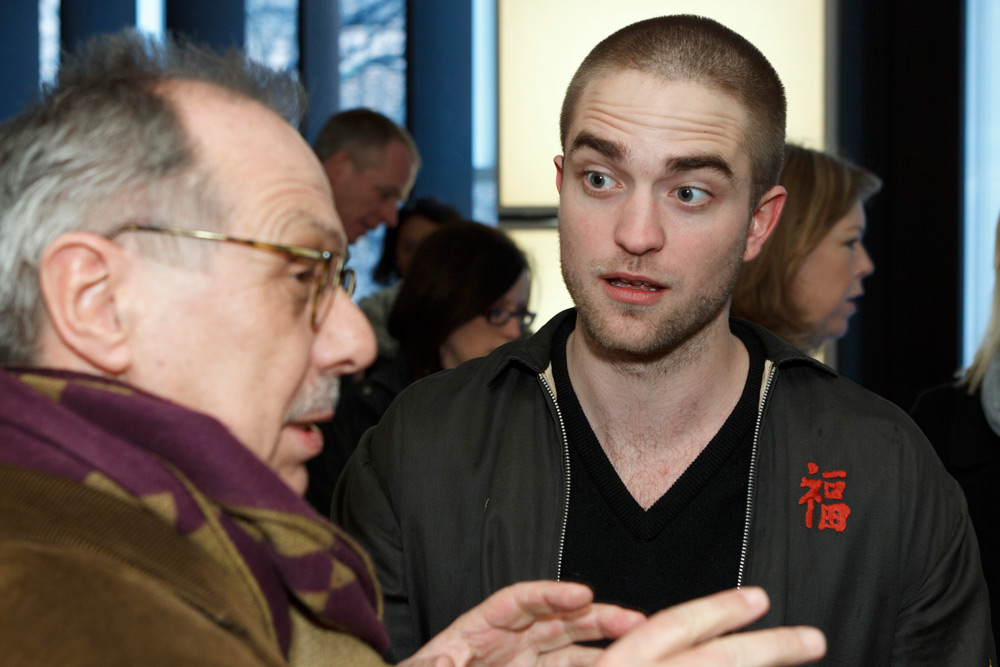
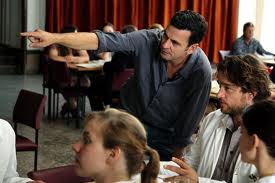 Until last month’s 62nd Berlinale – a typically star-studded event (Angelina Jolie, Robert ‘R-Patz’ Pattinson, Antonio Banderas, Shah Rukh Khan) which ran 9-19 February in an icily subzero capital and attracted over 300,000 ticket-buyers – the same was true of the writer-director who’s perhaps the most domestically influential and internationally respected of the ‘younger’ German film-makers: Christian Petzold, born near Düsseldorf in 1960. Yella, a psychological suspense film with political and romantic touches, enjoyed a brief British arthouse run in autumn 2007 – its star Nina Hoss having taken the Berlinale’s Best Actress trophy seven months before.
Hoss was fancied to repeat the trick for Petzold’s latest, Barbara, his fifth collaboration with the daughter of influential trade-unionist and long-standing Green Party MP Willi Hoss. Set in underpopulated corner of northern East Germany during the summer of 1980, this coolly-executed drama of suspicion and apprehension was of few standouts in a competition section which was generally regarded as somewhat lukewarm.
As it happened, Hoss went home empty-handed, Best Actress going to 15-year-old Rachel Mwanzaa for Canada’a War Witch, a suitably harrowing study of a Congolese child-soldier by Canada’s Kim Nguyen that left many hardened press-delegates visibly moved. But the jury – an eclectic bunch headed by Mike Leigh, including Jake Gyllenhaal, Charlotte Gainsbourg, Anton Corbijn and Asghar Farhadi (whose future Oscar winner A Separation took last year’s Golden Bear) – did show their approval of Barbara by giving Petzold the Best Director prize.
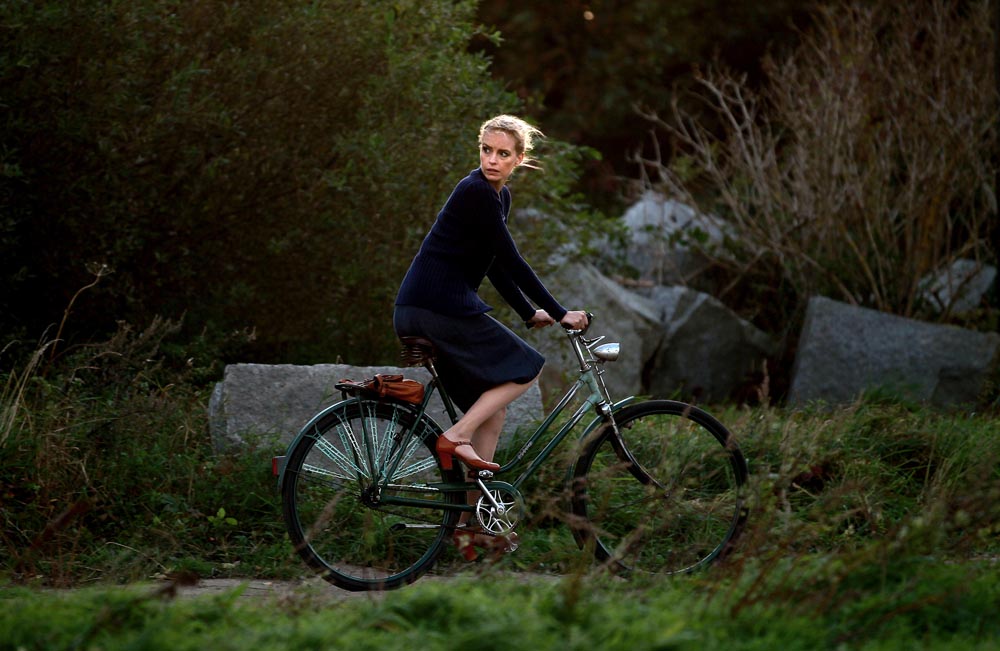
On the weekend of the awards Soda Pictures announced that they have picked up Barbara for a UK release, after a festival-premiere at either Edinburgh in June or London in November – both events having shown Petzold’s work in the past. While falling a little short of his best work – his first made-for-cinemas picture, The State I Am In (2000), is among the very highest peaks of German cinema post-Fassbinder – Barbara elevates what could have been a Mills & Boon romantic melodrama into a politically-charged parable of how individuals cope with life under totalitarian restrictions.
Hoss’s Barbara is a doctor who has been transferred to a small rural clinic, where despite the eagle-eyed attentions of the Stasi she’s s able to plan secret trysts with her West German lover. Various factors, however, complicate her intentions to escape – her commitment to her patients, her budding attraction to a hunky colleague, and a realisation that the grass may not be all that greener on the other side of the Curtain. As usual with Petzold, the direction is unfussily classical in its straightforwardness – he’ll never be accused of displaying maverick flair in that regard – with an old-fashioned attention to performance at the service of his meticulous, multi-layered screenplay.
Barbara unsurprisingly found favour with the German critics, who have always esteemed Petzold – of his five previous films, four won their award for the year’s best domestic film. Among international press, however, the sensational story of Berlinale 2012 was undoubtedly critic-turned-director Miguel Gomes’ Portuguese-Brazilian-French-German co-production Tabu, a playful two-part black-and-white homage to earlier cinematic forms – including the title, “borrowed” from F W Murnau’s 1931 ‘Story of the South Seas.’
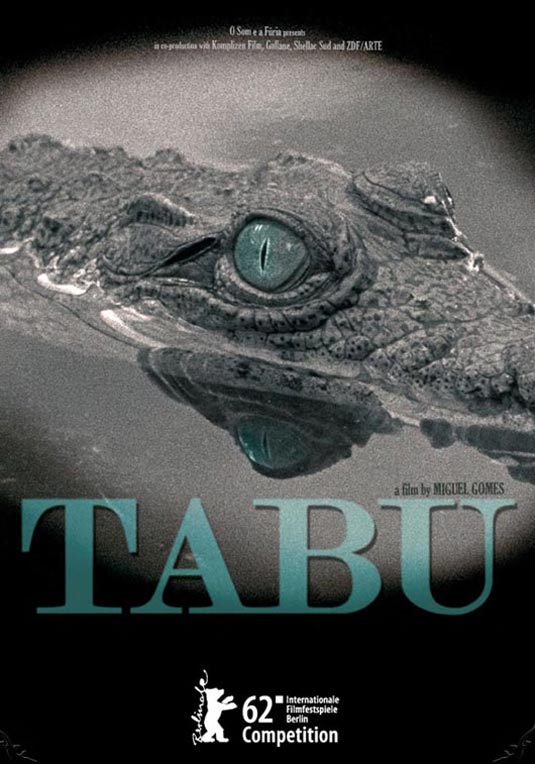 Gomes’ previous boundary-pushing feature Our Beloved Month of August was given only the most fleeting of UK releases – and that almost entirely due to the enthusiasm, influence and persistence of one Sight and Sound critic – but Tabu looks set for a significantly higher profile. While perhaps more stimulating in concept than execution, Tabu – which, as well as the international critics’ FIPRESCI gong, picked up the Alfred Bauer prize for innovation from the official jury (‘damning by faint praise’, Mr Leigh?) – was certainly a refreshingly oddball Golden Bear competitor among rivals generally content to adopt a safe-hands approach.
Berlinale-attendees in search of more challenging material had to turn, as usual, to the parallel Forum and ‘Forum Expanded’ sections where a trio of documentaries – Andrei Gryazev’s Tomorrow (review), Heinz Emigholz’s Parabeton (review) and RD Laing homage All Divided Selves (review), from British visual artist Luke Fowler – were among the more rewarding options far beyond the mainstream.
Leigh’s main-competition jury asserted their own individuality by giving their top prize to the shortest candidate and the oldest directors. Caesar Must Die is a 76-minute documentary-flavoured drama about prison inmates staging Shakespeare, from the octogenarian brothers Paolo and Vittorio Taviani, who in 1977 took the Palme d’Or at Cannes for Padre Padrone.
Rather bizarrely, the Italian veterens weren’t the only Palme-holders to follow up with a Golden Bear at this year’s Berlinale. At the other end of the age-scale the relatively unknown and unheralded João Salaviza picked up the Golden Bear for Best Short on the eve of his 28th birthday – his latest effort Rafa following up the Croisette-honoured Arena from 2009. Tabu and Rafa were the only Portuguese productions among the 400-odd films at this year’s Berlinale – suggesting that, despite its economic woes, the land of Pedro Costa and Manoel de Oliveira will continue to punch far above its weight in terms of cinematic prowess. Parabens!
Neil Young
28th February 2012
for Tribune magazine
