


Kornél Mundruczó’s PLEASANT DAYS (6/10)
—
A promising but flawed second feature from 26-year-old director Kornél Mundruczó (who also wrote the script with Viktória Petrányi and Sándor Zsótér) Pleasant Days starts off strongly, only to lose its way in the middle section — but then, when it does find a new direction in the final scenes, you end up wishing it had remained lost. The title is, of course, bitterly (and all too predictably) ironic: the days we see unfold in a medium-sized, unindentified Hungarian town (actually Kaposvár) are anything but pleasant.
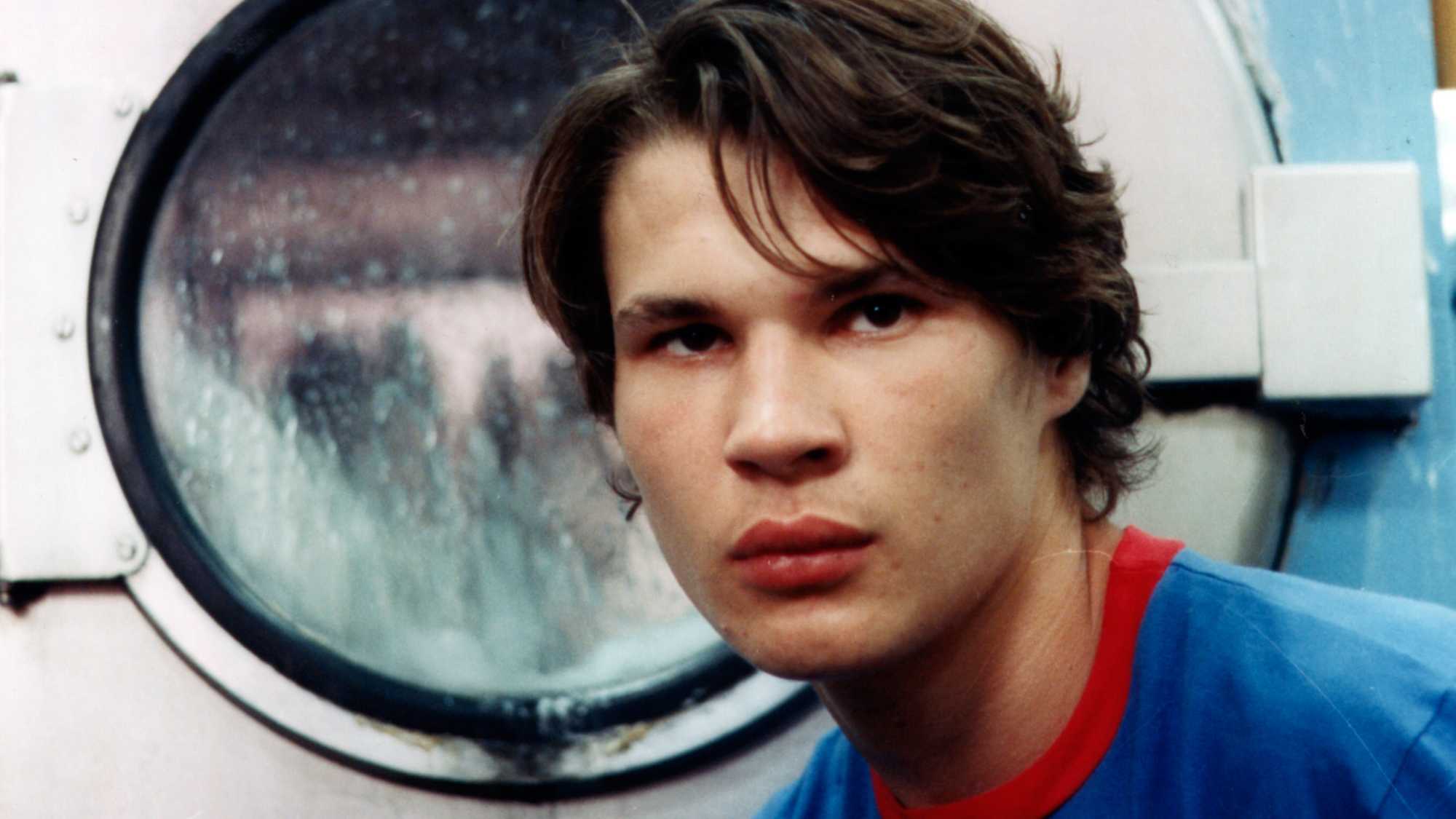
The summer weather is warm, but, as in Austria’s Dog Days, its an oppressive stifling heat — all the more so because Hungary, just like Austria, is entirely landlocked. Claustrophobia seems to be a pervasive national characteristic in this land, which boasts one of the worlds highest per-capita suicide rates. Surly late-teenager Peter, known as Petike (Tamás Polgár), is especially fed up with his lot. Just out of jail and with zero prospects beyond a vague idea of escaping to the seaside, he mooches around the local launderette where his sister Maria (Kata Wéber, strikingly resembling a brunette Chloë Sevigny), works alongside petite, pregnant blonde Maja (Orsolya Tóth). Petike drifts towards a relationship with Maja after she gives birth in the back room of the launderette, but soon finds himself entangled in her complicated love-life
Mundruczó sketches Petike’s world with a close attention his actors (close-ups abound) and to external detail: t-shirts are emblazoned with ironic slogans like “surf” and “cute & wild.” Props and actions are more important than dialogue for these inarticulate, dissatisfied young people who mainly communicate in deeply meaningful looks and stares — at one stage, Petike takes a bath inside a washing-machine, and later wears boxing gloves in the bath as he washes his hair. In a series of these fragmentary episodes, Polgárseems to get right inside Petike’s head — he’s never quite sympathetic but, with his naturally insolent set of features, he projects a compellingly dark, brooding energy that’s engaging to watch.
There’s clearly a heavy reliance on improvisation involved — Mundruczó’s estimate is two-thirds — and this makes for a believable, if occasionally awkward vision of Hungarian youth. But it’s very difficult to make this kind of loose improvisation stretch to feature length — it can’t be a coincidence that, in the most successful recent example of European teen-anomie, School Trip, director Henner Winckler demanded his young cast rigidly adhere to their script. Pleasant Days starts running into problems as it tries to develop a narrative around Petike, Maria, Maja and Maja’s various other lovers: for one (fairly crucial) thing, its hard to keep track of who’s who and what’s what.
The characters’ ongoing sexual frustrations reach a startlingly violent climax, meanwhile, that jarringly forces the audience to re-evaluate its view of Petike. Soon after this spectacularly bleak sequence, there’s a very sudden tragedy involving a major character that’s equally difficult to digest. It feels as though the director and his co-scriptwriters have lost control of their material, allowing it to veer off down arbitrarily nightmarish paths that don’t do justice to the characters they’ve so painstakingly developed — leaving a nasty taste in the mouth as the credits roll.
Neil Young
19th August 2002
(seen 15th, Filmhouse Edinburgh Edinburgh Film Festival)
Szep Napok : Kornél Mundruczó : Hungary 2002 : 100 mins