
CINEPHILIA MON AMOUR?: answers to a questionnaire

1. How has the relationship between cinephilia and film festivals changed during your career as journalist and film critic?
Background note: my “career as a journalist and film critic” basically dates back to the late 90s. though I did not switch to that role being full-time until 2011.
There are so many different kinds of cinephilia and so many kinds of film-festival — and each have evolved in so many different ways — that this question is actually quite difficult to answer!
Broadly speaking: since 2000 the number of film-festivals around the world has significantly increased (though there was a post-pandemic dip), whereas the “arthouse cinema” business has declined (the pandemic, conversely, accelerated this process.) The consequence of these two trends is that for many people the only place now to see new serious/artistic films on the big screen — especially new ones — is at festivals of relatively short duration (5-10 days on average), not in their local cinema all year round.
Since 2000 film-festivals have increasingly taken on a “gatekeeping” role, determining which films, which filmmakers, and which types of film get to make contact with what we might call the global “cinephiliac” population. The emergence of digital around the turn of the century, and its rapid adoption as the norm post-2005, triggered a bewildering number of films being made all over the world. In addition and in tandem, film-schools have proliferated, churning out several thousands of “new filmmakers” every year.
Film-festival programming thus becomes crucial in determining which films get to enter the cinephile and critical “discourse.” Since around 2010, Cannes and Venice have proven especially influential in this regard — though this influence is not neutral and (from my perspective) has actually been, if anything, malign, given that the questionable “tastes”/requirements of two men (Frémaux and Barbera) have since 2015 exerted a disproportionate impact on the art-cinema world.
Neither is what anyone would call a politically-oriented curator, and so it’s no surprise that this duo should so extravagantly prosper in a cultural environment shaped/warped by the neoliberalism which entered its current phase with the so-called economic “crisis” of 2008 — whereas the Berlinale, traditionally the most political of the big three, has seen a dramatic decline in profile and status during the period in question.
Looking at the bigger picture, too many cinephiles are — in terms of new films — content to accept the gatekeeping choices of the major festivals. It’s different for those cinephiles who devote significant amounts of time to older work, as “archival” cinema (let’s say, pre-2000) is now of minor interest to the most high-profile festivals who need to remain on good terms with their sponsors and funders.
The increasing availability of older films, and their “fashionability” thanks to Letterboxd, has meant that many younger (under 40) cinephiles are less focussed on new works, and so feel less need to attend film-festivals in order to “keep abreast” of what’s going on. Film-festivals thus become more the domain of those who must attend them for professional reasons — critics, programmers, etc — rather than to maintain and nourish their cinephilia.

Thom Andersen
2. Do you see the contemporary film festival as more than a place to watch films — as a space where criticism, programming, discovery and cinephile communities intersect?
Again, everything I say here comes with the caveat that there are many different types of film-festival!
But any film festival worthy of the name must have a “festive” element, a celebratory “fiesta” aspect which means we celebrate, valorise, define and defend an art-form which is always in perpetual peril of being dismissed / sidelined / overtaken by mainstream/commercial elements (and also by television, which of course has successfully sought to encrach on the film-festival space for several years now, a trend I unambiguously detest.)
They must also be opportunities to bring people together from different places — though of course also attracting locals — some of whom will know each other already, some of whom will meet for the first time. Thom Andersen wrote that public screenings of artistic cinema are essentially a useful pretext for oddballs of similar types to gather and meet, and this is true on the wider scale when it comes to film festivals.
The intersection of different elements of the festival demographic — as outlined in the question — is obviously very important, as such groups have few other opportunities to “hang out,” debate/discuss and get to know each other in the more relaxed moments between and after the frenetic periods of work/watching.
The film-festival circuit — speaking of the more high-profile events — is also a way for a global community of decidedly fortunate, mostly (relatively) affluent individuals to gain and assert a shared “tribal” identity.
3. What do you think is the role of the film critic within the festival ecosystem today? Has that role changed with the rise of digital media and social networks?
The core principle of all journalism: “speak truth to power.”
Film criticism is a form of (cultural) journalism, and the most basic function of a critic at a festival is to encourage the talented (talent exists) and discourage the untalented. We should all want to help cinema continue to grow and prosper and be a relevant art-form — and this is no easy matter since there are such powerful economic and social forces which work against that (Hollywood, streaming/TV, major corporations, faddy distractions such as VR and AI).
A festival will usually include numerous sections and sidebars — the critic is not doing their job if they focus solely on the main competition or the films with the biggest stars. If the critic doesn’t do the “donkey work” and check out the “lesser” sidebars, including shorts, experimenta and retrospectives, who will?
Journalism is also famously the “first draft of history” — and the immediate reactions of critics, published (in any form, including social-media mini-reviews) in the minutes, hours and days after the screening are — at least when it comes to world premieres — that “first draft.”
Film critics are (or should be) an independent but integral part of the film-festival ecology. We often see and know about many, many more films than anyone else attending and/or working at such events, especially in terms of the historical context rather than just the trends of the last few years.
Also, because so many critics attend multiple major festivals per year (I usually manage a total of around 20, including festivals of all sizes) some degree of overview is possible which those working on the “chalk face” or programming/production are rarely able to obtain.
In the case of a festival like San Sebastian, a newspaper like El Pais Vasco will devote several pages each day to the festival, most of that news-based (which stars are there etc) but also making lots of room for objective reviews. This strikes me as a healthy balance.
In addition, the presence of film critics (especially prominent and/or respected ones) at festivals confers a certain measure of prestige on such events — this is why most worthwhile festivals continue to think it is good business to encourage coverage by paying for critics’ accommodation and even (for the trades) travel in certain circumstances. The tricky part is maintaining one’s independence and objectivity and avoiding the compromises potentially inherent in such deals.
The Rib of the Greater Bay Area
4. Festivals have become important places for discovering films and filmmakers that may otherwise remain outside mainstream circulation. Do you think they are also increasingly shaping what becomes visible within contemporary cinephilia?
This question neatly ties in with the answers I’ve given for the previous ones!
When we talk about “contemporary cinephilia” I think it’s reasonable to stick to the last 10 years or so with a particular emphasis on the post-pandemic years, i.e. the current decade. So while I would exclude commercial/consumer reviewing that encompasses a wide range from highbrow analysis in scholarly journals and magazines, to people frenziedly “logging” films on Letterboxd and posting micro-reviews on social media, and everything in between.
There is also of course a cinephilia which leaves no trace — people who love cinema (the literal meaning of “cinephilia”) past and/or present but don’t write about it and don’t engage on social media about it. And some of them will get their “fix” at film festivals either in tandem with or instead of experiencing cinema in other forms (and here it’s important to note that you can “experience cinema” in a cinema, i.e. a public projection in a movie-house or similar, and on your TV / wall at home, it’s all equally valid).
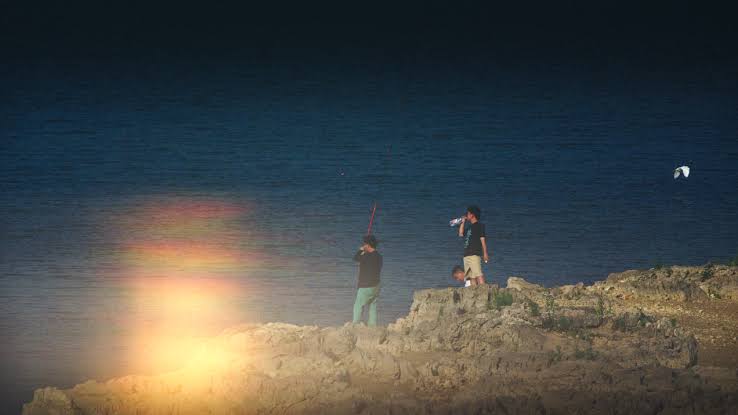
I’d say that for the majority of people we can call cinephiles in the last 10 years, the film-festival ecosystem has indeed shaped what they can see, and how they can see it, and how it is received. Typical case: a film premieres at Cannes in May, gets exposure at north American festivals in autumn, may reach the cinema or your local festival in the early part of the following year. As these months have passed the film in question has gathered a cultural status which may be very high-profile (La Bola Negra) or much more niche (The Rib of the Greater Bay Area).
It is most unusual for a film to emerge into the cultural sphere without festival screenings and support, though of course it can happen in the marginal areas where filmmaking intersects with gallery installations and so on.
But I think it’s encouraging that younger cinephiles (under 40) have, post-pandemic, plunged more deeply into the medium’s past: most major cities have seen a major upswing in attendance for pre-2000 films, it’s now “cool” to attend and know about films from the 40s, 50s and 60s, in a way it hasn’t been for decades. This branch of cinephilia (which is currently easily the most vibrant of all) is the one least affected by the film-festival ecology, though of course if a major festival or an archive-only festival like Bologna “unearths” a “lost classic” or a neglected master/mistress, that may well have a trickle-down effect into rep cinemas around the world.
5. Do you use platforms such as Letterboxd and social media? And how often? How much, do you think they have changed the way people express, share and construct their cinephile identities?
I use Letterboxd, Twitter and BlueSky pretty much every day. There are many cinephiles (the majority of over-50s for example) who don’t use such “platforms” at all, but for the younger generations (under 35s, let’s say) they are absolutely crucial in the process of what you call “expressing, sharing and construcing their cinephile identities.”
However even among the latter group there is a split between those who primarily or entirely “nourish” their cinephilia with the help of social media, and those who primarily rely on more “old-school” methods — with many shades of grey in between. So I’d be wary of monolithic, sweeping, categorical statements about this. And I know very little about, say, “Film Tok” or the way cinephiles use Reddit, Facebook, Instagram etc.
What I have seen is that Letterbod over the past 3-4 years has revitalised cinephilia in many parts of the world, and not just among under-25s who care about what CharliXCX is watching/logging. The Letterboxd “lists” have been very useful in encouraging people to venture beyond the mainstream and traditional canons. Let’s see if/when such positive trends can be maintained if/when Letterboxd is swallowed up by some corporate entity in the coming months. Already I have heard of “Millimetre” which is positioning itself as a potential beneficiary if Letterboxd loses its hip mojo.

The Day the Earth Caught Fire
6. In a film festival critics often have to watch and write at great speed. Does this acceleration change the way films are experienced and discussed?
Yes, but the ones who write at “great speed” tend to be the ones who are comfortable doing so. Writing for a trade-outlet, for example, requires a certain kind of mindset and discipline than writing for Sight & Sound or Cahiers, where a more reflective approach is preferred by editors.
This comes back my earlier answer about premiere-reviews being the “first draft of history.” There’s a lot to be said for the sheer immediacy of leaving a cinema with the film still reverberating through your mind/body, and being able to translate those feelings into words. Even if you may look back on those words with disapproval or disagreement within weeks or even days!
This is one reason why I always make a lot of notes when watching any film I know I’m going to be reviewing; I want to have a record of what I was thinking about the film while I was in the process of watching it. And then after it’s over, sometimes I’ll make additional notes, perhaps as a result of doing immediate research on some detail or contributor which caught my attention.
An ideal scenario at a film-festival is when you get to watch a film at a press screening AND at a public screening; the atmosphere can be very different between the two. In fact, I probably prefer to see films at public screenings because cinema is a communal experience intended to be absorbed in a large group — there may be some filmmakers who primarily have critics in mind when making their work, but thankfully they are in a small majority.
To return to how I started — every critic is different, they will have their own “natural” speed which is the result of their experiences and how they have developed their craft over the years. I don’t believe in agonising over each word — once I have the opening line(s), the ball is rolling and I usually find I have poured out 400-500 words in less than half an hour. And this suits the “frenetic” environment of festival reviewing, though of course the reality of embargos mean that outlets are, these days, seldom competing with each other to get their reviews filed first. But the sooner one files, the sooner one can move on to the next review / film / dinner / whatever. Time runs differently at film festivals.
7. For someone who has worked both as a critic and in festival programming, how do you see the relationship between criticism and programming? Where do the two roles overlap, and where should they remain distinct?
Everybody has to set their own boundaries. I’ve been the head of a festival, programming films that I’ve written about in publications, but it (Bradford) wasn’t a very high-profile one in international terms. I know of a prominent programmer at a leading international festival who is also a prominent critic who reviews films at other prominent festivals. That’s a very tricky balancing-act for him to pull off, not least in terms of appearances, but he manages it. Chapeau!
A large chunk (but not all) of programming involves championing and promoting work you think is worthwhile. That’s the same for criticism, though of course the latter will also involve writing about films which you’re mixed or negative about, and which probably won’t enter the equation if you’re drawing up (or helping to draw up) a selection of films for a festival.
The positive energy which is cinephile enthusiasm can be expressed in several practical and valid ways, including both writing about the films in question AND enabling others to see them in festivals and showcases. And of course programming itself can and should be a creative act, enabling “dialogue” between films and filmmakers and encouraging audiences to make connections, ideally in tandem with written programme-notes etc.
Provided everyone is aware of what conflicts of interests may arise — perhaps an optimistic/naive perspective on my part there — I see no harm at all in programming and criticism overlapping. And indeed given the shrinkage in payments and options post-2008 (the “crisis” I referred to earlier) for many people it’s not a question of choice — to make ends meet, we have to combine various roles, and it’s by no means unusual for critics to also be programmers and also be involved in the academic world via teaching.
But as this happens the ethical dimension becomes even more important: an ongoing process of honest self-appraisal to ensure that basic professional standards are maintained across the industry.
8. What, in your view, distinguishes contemporary cinephilia from simply being an intensive consumer of films?
Intensive consumption of films” sounds to me more like “cinephagia” (the ‘eating’ of films) than cinephilia as I understand it. The latter is a love and appreciation for cinema which takes up a significant portion of one’s life, but does not necessarily involve watching a huge number of films.
I myself don’t average one a day — this year I’m on track to see around 200 (feature-length) in cinemas / public projections and 100 in other ways (DVD / online / TV). But that’s obviously much more than most people manage, even those who would dub themselves cinephiles — partly because I need to watch a lot of films for professional purposes.
Contemporary cinephilia is, as I said earlier, not a monolithic phenomenon. It has many shades, branches, variations — which is healthy. As I mentioned already, I see a heartening increase of interest in “old films” seen both publicly and privately, reflecting a more adventurous approach on behalf of both audiences and exhibitors. Bologna and its imitators around the world are thriving, though curatorially many of them leave a lot to be desired.
Platforms like Letterboxd encourage people to write SOMETHING about the films they watch, which may or may not technically constitute a review in the traditional sense. And it’s now much easier to see what our friends — and online “friends” — are watching/discovering. This seems to be the early stages of a new form of global cinephile network — which will hopefully survive the imminent corporate takeover of Letterboxd, and which will hopefully continue to valorise and defend the big-screen, public experience against those forces (TV/streaming) which are its historical and current enemies.
28th-30th September 2026