


Live Through This: Performing Unspeakable Truths at Doclisboa 2025, by Marius Hrdy
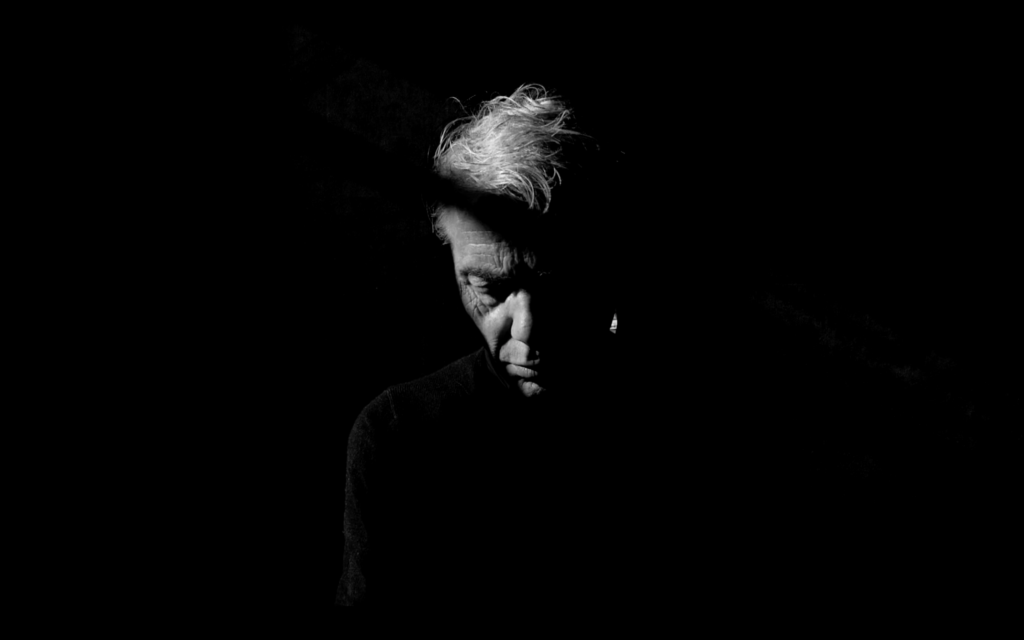
Jacques Meilleurat’s Appuyé au mur (Lean on the Wall) is a tough watch. The author himself sits in a chair playing Bernard, face moistened from lots of crying and the heat, framed in black and white image. He tells a story of abuse so gut-wrenching, so hysterically hurtful, it must last for two lives. Channelled through one body, agonising, drinking wine from the bottle, wrestling with the past. He tells of a boy who at eleven years old faced regular sexual abuse by a teacher and then by a psychiatrist in his later teens. Woven between sits the story of motherly incest and Meilleurat remains ambiguous in the source of such uncompromising details.
A topic so prominent in liberal circles in Europe in the 1970s and especially discussed in France and Germany often after the fact, often with impunity, the film raises questions of coming of age and “legal” sexuality versus abuse, while equally negotiating the aftermath of such trauma. A particular scene stands out: In a series of movements, Bernard holds a gun onto his chest, belly and side. Through its repetitive quick edit, an elliptical dance movement evolves, pointing at an all-encompassing self loathing this history must have induced, yet he stops shy of pulling the trigger. Eventually, Bernard/Meilleurat dissolves in a dance with his wife, a tender moment on continuing life with an unspeakable biography.
In another programme, Meilleurat’s more recent Si petite (2025) is shown in a pairing with Stan Brakhage’s Anticipation of the Night (1958). Si petite is based on Frédéric Boyer’s true-crime story, and is much more austere and rigid in its structure than Appuyé au mur. Meilleurat sits, again filmed in black and white, at a table, with pen and paper and writes down the account of a story of an area in France in which an unfathomable crime occurred. A couple starved their eight year old girl and then killed her and poured concrete over the corpse, then went on to have a jolly time with their other two children the next day. The victim was questioned by police before, as there was suspicion by the neighbours that she was beaten by her parents. However she denied receiving violence, stating that her visible bruises came from running into things.
In a later shot, we see Meilleurat in the chiaroscuro contrasts of light in his face and shade on his upper body, still keeping on writing. It emphasises the emotional struggle when faced with such facts of cruelty and the impossibility to change them, but still continuing with registering the information. Positioning Brakhage’s Anticipation — shot during a time of suicidal thoughts after a called-off wedding — before Si petite creates resonances in opposites but also in parallels by way of the lyrical. While Meilleurat’s film is made with tripod-fixed shots and follows the voicing of a script while progressively revealing the filmmaker’s reaction to the cruelty recounted through his body movements, Brakhage shot his footage with a handheld camera and revels in the asymmetry of objects in time and space.
We see his gaze focus on an infant’s movements, as it is asleep, when rolling, stretching, engaging in its own impulsive rather than structural logic of reality. We see nocturnal shots of empty roads and forests, natural ungraspable phenomena as rainbows and light reflections that position the viewer in waves of the intangible. By and by the meandering after-images in Anticipation morph into haunting reminiscences of Twin Peaks in Si petite later, when the staccato-delivered corset of information provided in the first part of the film is shed and relaxes into Meilleurat’s body and the whole crime, the place, the bodies involved become alive within his subtle and tense movements, but still rest within our imagination.
Meilleurat’s habitus spilled over into this year’s “Shadowboxing” programme, which focused on Palestinian life in the face of perennial oppression and current genocide and the extended implications in the area. In the curators` words, programming these sessions is “a reflection of what the reality does with us,” while emphasising that expressing thoughts need not develop into comment or talking about the unspeakable events with the aim of conclusion or partisanship, but to express what these events do to us all through the positions of filmmakers. It did so without being overtly literal, but with the formal connections between the films themselves.
Thus, a couple of mountain runners pacing downhill through the rocky rabble of the Mer de Glace in Camille Llobet’s Moraine conversed eerily with a ghostly car ride through the rubble of bombed and collapsed buildings in Beirut and Lebanon’s South in Ghassan Salhab’s No Title. Watching a theatre director at a rehearsal guiding the correct positioning of an invisible actor in Ahmad Natche’s The Storyteller connected with the mirroring effects of interrogating agency and shifting perspectives in Judith Abensour and Thomas Bauer’s Parades.
And finally, Pierre Creton’s candle reflecting in the window view of Still Life Primavera, morphing in my mind with Palestinian poet Mahmoud Derwish’s words in Le Meilleur spectateur de la pièce historique qui se joue sur terre: “I am from here and I am here, I am here and I am from here.” A fitting impression on viewing this year’s Doclisboa.
Marius Hrdy
29th October 2025