6/11/25: Lanthimos day in Thessaloniki
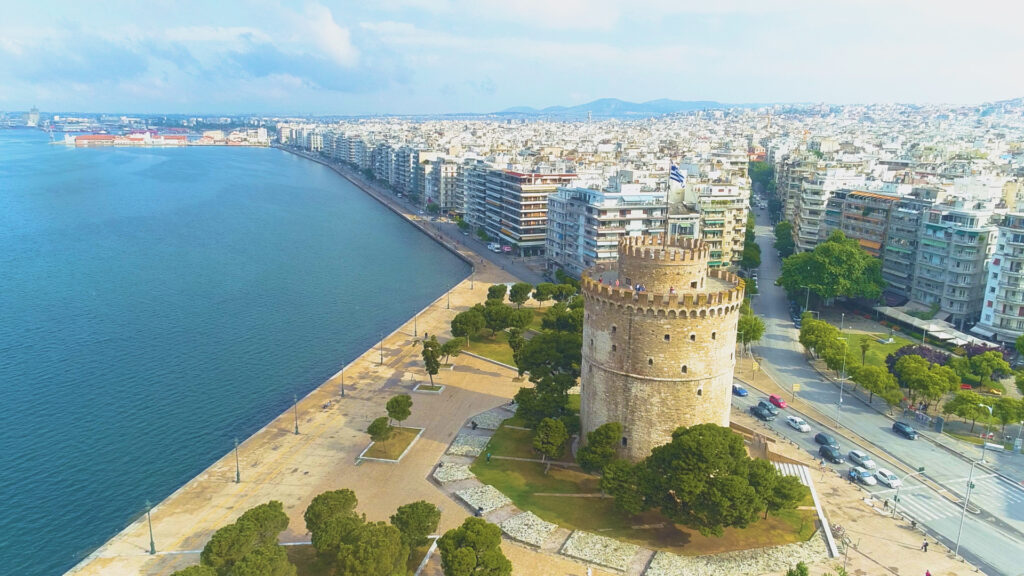
It’s 3.30pm, Greek time, on Thursday 6th November 2025 and I’m sitting in a Thessaloniki restaurant, selected solely because it affords such a nice view of the city’s most famous landmark, the White Tower (Lefkós Pýrgos). Located right next to the harbourside, the White Tower has been there since the second half of the 15th century, back when this city was part of the Ottoman Empire — it only became part of Greece in 1912, and is now the country’s second-biggest metropolis. But Athens has got nothing on Thessaloniki when it comes to film festivals: the eclectically stimulating Thessaloniki International Film Festival (TIFF) has been a fixture on the circuit since it started (as a Greek-cinema-only showcase) back in 1960, and the documentary festival held in March is also a pretty big deal. This year’s TIFF kicked off a week ago on October 30th and ends on Sunday.
The major source of buzz has been the visit on Monday and Tuesday of Isabelle Huppert, who delivered an amusingly frosty press-conference, a slightly warmer “masterclass” (aka on-stage interview), and introduced Paul Verhoeven’s Elle at the festival’s main Olympion cinema venue on the main Aristotelous Square (also adjoins the waterfront), at which screening she was presented with the event’s lifetime achievement award, the Golden Alexander.
I missed all such excitements, though I did happen to pass La Huppert in the street one evening. As usual at this festival, and also at the documentary one (this is my fourth time at the former; I “debuted” here in 2021), I tend to concentrate on the lower-profile retrospective elements. Today, in the “Plot Twist: Beyond the Sixth Sense” sidebar I caught Yorgos Lanthimos’ Kinetta (2005), his solo directorial debut — he co-directed the somewhat more mainstream raunchy comedy My Best Friend (2001) with Lakis Lazopoulos, who wrote the script.
Kinetta screened at noon in what is, for me, a landmark at least as important as the White Tower, namely the glorious one-screen Makedonikon cinema, built between 1932 and 1935 at the junction of Filikis Eterias and Dimitrios Margaritis streets just across from the dinky 19th-century Church of Agios Antonios (St Anthony). The Makedonikon is also a “holy place” and not just for cinephiles; the building — designed by Giorgos Manousos and Simeon Mylonas, and partially rebuilt after damage in the 6.5-magnitude earthquake of 20th June 1978 — has the cinema at the front and at the back the city’s main Masonic temple, the two parts separated only by an interior wall. If another cinema in the world shares its structure with a Masonic temple, I’ve yet to hear about it.
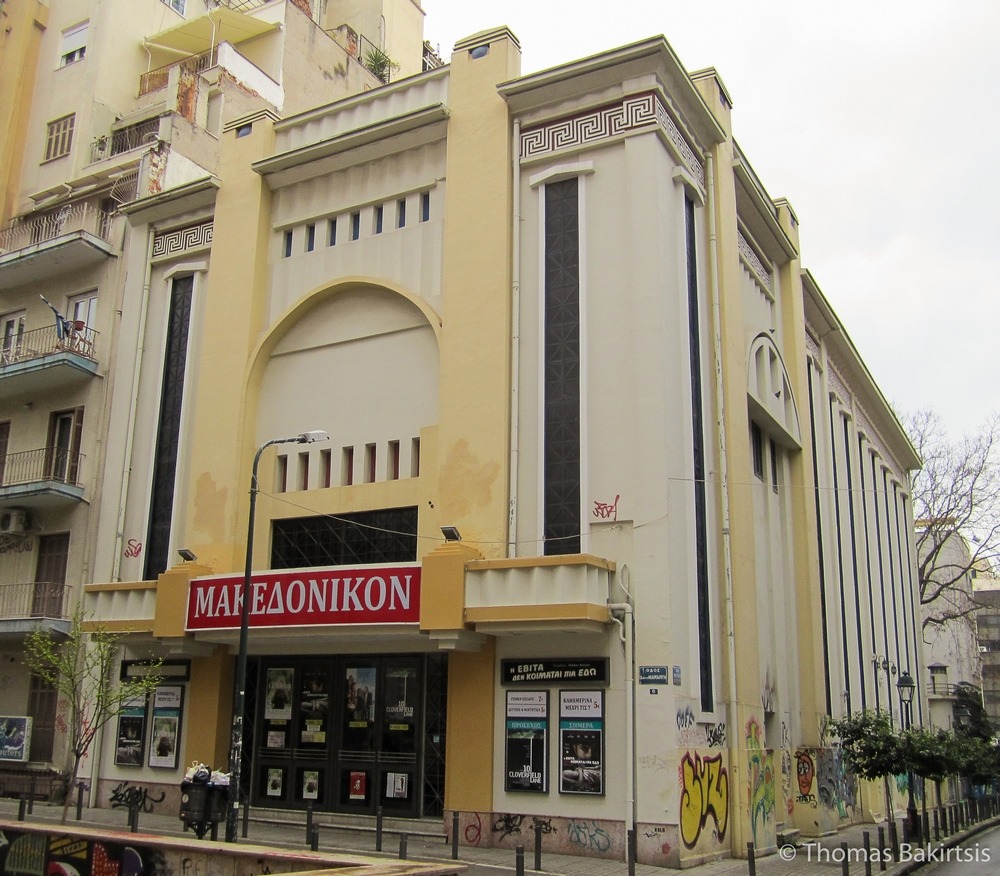
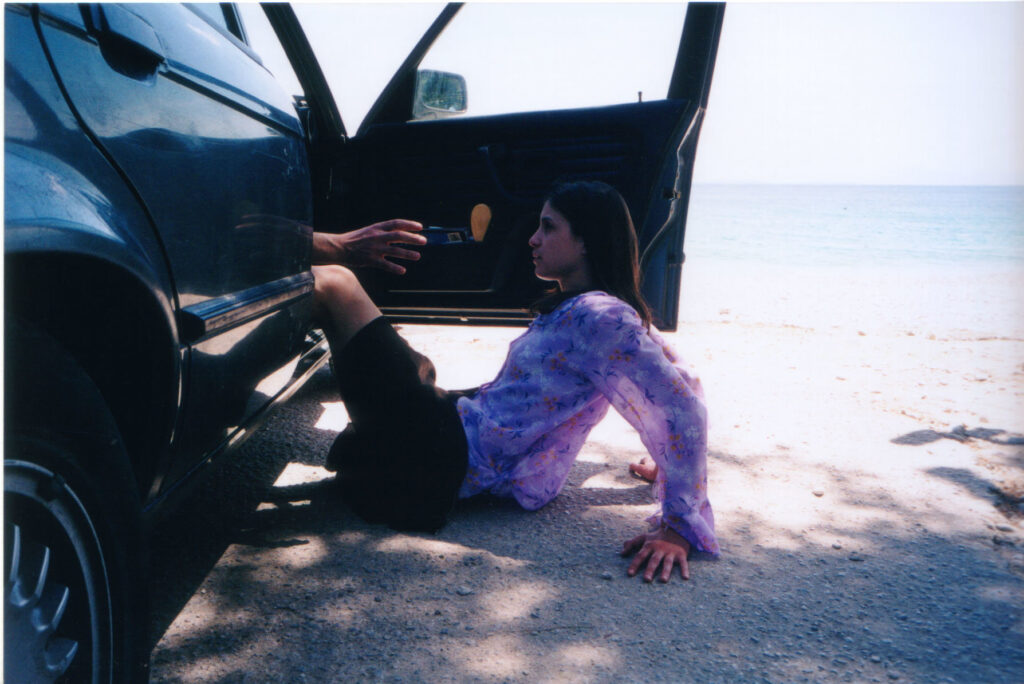
I always try to visit the Makedonikon at least once when I’m in the city, and it’s used by both of the main film-festivals; at night it’s particularly irresistible, as it’s very much a traditional “neighbourhood” cinema located in a lively part of Thessaloniki. But even at noon it exudes old-school charm. As for Kinetta itself… For me, it was very much “answers-on-a-postcard” stuff, I had almost no idea what was going on most of the time. It’s a jaggedly elliptical affair which seems unconcerned about audience comprehension; various characters go about reconstructing accidents, which are filmed. For police purposes? Hard to tell.
The whole concept of a film based around reconstructions is itself a hat-tip to Lanthimos’ illustrious countryman Theo Angelopoulos, who when Kinetta debuted at Toronto in September 2005 had ranked high among the world’s leading auteur for decades — he won the Palme d’Or in 1998 for Eternity and a Day. His debut feature was Reconstruction (1970) in which a judge, cops and journalists reconstruct a rural crime as part of their investigations.
Two months after Toronto, Kinetta played in the main competition at TIFF but left empty-handed; very surprising to note now, given Lanthimos’ subsequent sensational success with his 2009 follow-up Dogtooth (then again, Lanthimos has always been something of a “prophet without honour” on home turf). 20 years after Kinetta, he’s now one of the most famous and feted directors in the world — I was in the big room of the Olympion last year when the Oscars were shown live on the big screen, with each of the four wins for Lanthimos’ Poor Things cheered to the echo (he notched his second Best Director nomination, but again missed out on the prize itself.)
Since then, busy bloke, he’s had Kinds of Kindness in competition at Cannes (2024) and this year at Venice unveiled Bugonia — which, in a neat bit of TIFF scheduling, is released this very day in Greece. A short walk from the Makedonikon is the two-screen Vakoura cinema, more functional than architecturally notable though under the same management and ownership as its fancier neighbour, where Bugonia plays at 6.45, 9pm and 11pm tonight. I’m sure several patrons in the 3/4-full screening of Kinetta will make it a “Lanthimos day” by catching both. He’s definitely come on leaps and bounds in the two decades between the two films.
I saw Bugonia at a press screening in Vienna last week; while undeniably uneven, for my money it’s one of only two picture I’ve seen by him that I’d term satisfactory — The Favourite being the other (I can forgive a film a lot if it has a crackerjack ending, which Bugonia does). Dogtooth did dispritingly little for me (years later in northern Finland I saw the picture it’s unofficially [ahem] based on, Arturo Ripstein’s The Castle of Purity [1972], which drove me half up the wall), I bailed on Alps after about 20 minutes of the Venice press show (“hillocks” was my one-word review on social media).
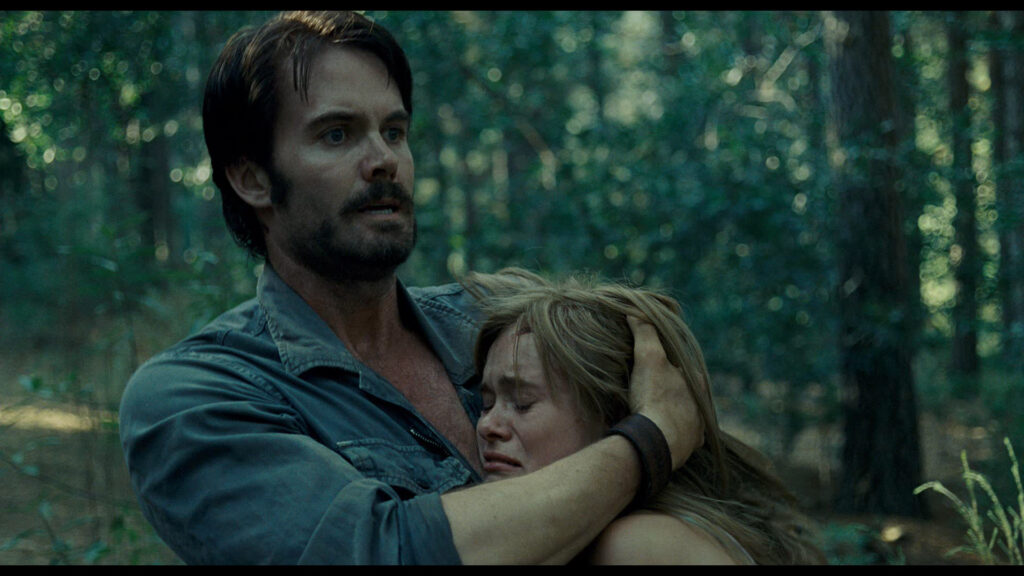
The Lobster I had to stay until the end of because I saw it as part of jury-service at a festival in Hungary (this was a struggle); I consciously avoided The Killing of a Sacred Deer, and wasn’t bothered about seeing Kinds of Kindness. Indeed, the whole of the “Greek Weird Wave” was for me a persistently puzzling phenomenon; the only Greek-directed picture of the 2005-2015 period I seriously rated the rugpullingly audacious, rock-the-house remake of Wes Craven’s The Last House on the Left (2009), by Dennis Iliadis.*
So it wasn’t exactly a surprise today when I struggled to get on Kinetta‘s wavelength. And I certainly wasn’t alone; the elderly woman to my left slept through the entire second half (her daughter struggled to wake her up during the credits); a middle-aged patron in front, after about an hour, consulted an online review/synopsis on the website Cinobo, clearly as baffled as I was. I didn’t have the heart to ask her to switch it off, and to be fair she did have the display on “dimmed” mode.
Screenings at TIFF usually conclude with applause, especially if they’re retrospectives: Crouching Tiger, Hidden Dragon got quite the ovation yesterday (myself among that number!). Kinetta‘s conclusion was met with a slightly awkward silence. And why was it in the “Plot Twist” section anyway? (I asked myself the same question about Kiarostami’s Close-Up, which played in the same strand at the Makedonikon on Tuesday afternoon.) If there’s hardly any plot to speak of, how can there be a twist? Or… is that the twist???! Answers on a postcard, please.
Neil Young
4.30pm, 6th November 2025
* p.s. for TIFF itself, 6/11/25 was more accurately “Yorgos Tsemberopoulos Day,” as the festival’s retrospective of works by the 75-year-old veteran culminated in a sold-out screening, in the big room of the Olympion, of his best-known picture The Enemy Within (2013) — before which he was presented with the Golden Alexander for lifetime achievement.
Among those on stage paying tribute to Tsemberopoulos (whose 1974 Megara, co-directed with Sakis Maniatis, is right up there with the very greatest of Greek documentaries), his screenwriting collaborator on Back Door (2000), Dennis Iliadis.
A satisfyingly tense psychological thriller with Death Wish overtones and an especially outstanding supporting performance from Giorgios Gallas, The Enemy Within won the prizes for Best Director, Best Screenplay and Best Editing at the Hellenic Film Academy awards in 2014 — the ace editor in question being Lanthimos’ regular cutter Yorgos Mavropsaridis, who’s been with him all the way from Kinetta to Bugonia.